
Mrs. Gloyta Nathalang, Senior Executive Vice President, Sustainability Management and Corporate Communications, Bangchak Corporation Public Company Limited, shared perspectives on carbon markets and sustainability at two forums: Climate Futures APAC Summit (CFAS) 2026 and the “Sustainability is Survival” forum organized by the College of Sustainability Studies, Srinakharinwirot University.
At Climate Futures APAC Summit (CFAS) 2026, Mrs. Gloyta participated in the panel discussion “APAC Carbon at a Crossroads: Signals, Risks & Strategies for 2026–2030” in her capacity as Chair of Carbon Markets Club. She joined representatives from leading regional organizations in carbon markets and sustainability, including the Environmental Defense Fund (EDF), the Integrity Council for the Voluntary Carbon Market (ICVCM), Boeing, the European Federation for Transport and Environment, and Bursa Carbon Exchange, while a representative from the Institute for Global Environmental Strategies (IGES) served as moderator.
Mrs. Gloyta reflected on the evolution of Thailand’s carbon market over the past decade, which has progressed continuously from ecosystem building and awareness raising during 2015–2020, to increasing demand for carbon credits following COP26 during 2021–2023, and greater emphasis on market quality, transparency, and credibility during 2023–2025. Today, the market is entering a new phase characterized by the practical implementation of market mechanisms through Article 6 of the Paris Agreement, which enables countries to collaborate and trade emissions reductions across borders, as well as through climate policy development and increasing international market connectivity.
She noted that future market development will require robust data and measurement systems, investment-ready projects, international market linkages, and digital technologies to enhance transparency and market credibility. Regional collaboration is equally important, as ASEAN possesses significant emissions reduction potential, sources of capital, and growing demand for carbon credits, while carbon markets in the region remain highly fragmented.
At the regional level, Carbon Markets Club has worked with partner organizations from Malaysia, Singapore, Indonesia and ASEAN to establish the ASEAN Common Carbon Framework (ACCF), which promotes knowledge sharing, capacity building, market connectivity and cross-border participation. At the same time, governments across the region have advanced the High-Integrity ASEAN Carbon Initiative (HACI), led by Thailand’s Department of Climate Change and Environment, to strengthen the integrity and credibility of ASEAN carbon markets. Together, these initiatives reflect complementary efforts at both the policy and market levels to support the long-term growth of carbon markets in the region.
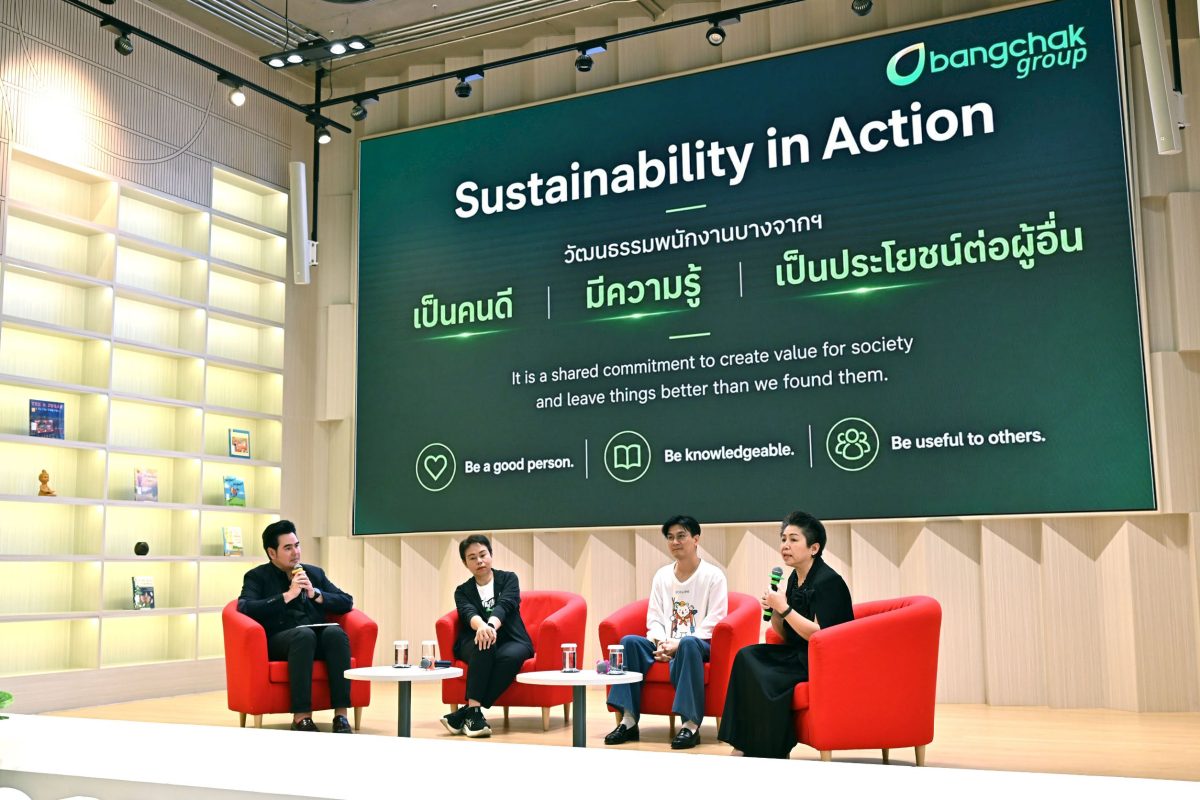
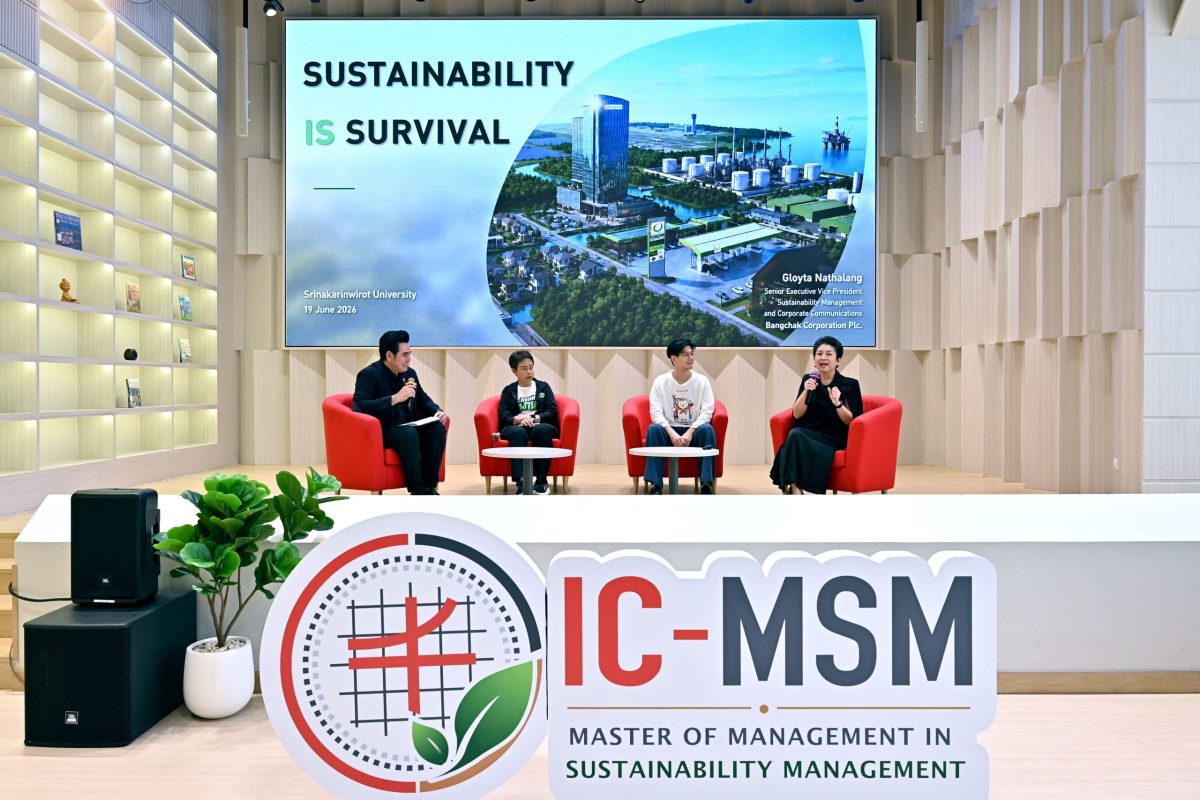
In addition, Mrs. Gloyta participated in the “Sustainability is Survival” forum together with Associate Professor Tavida Kamolvej, former Deputy Governor of Bangkok, and Mr. Pipat Apirakthanakorn (Top), actor and social sustainability entrepreneur. The session was moderated by Mr. Nithi Samutkojorn (Job) and organized by the College of Sustainability Studies, Srinakharinwirot University to exchange perspectives on sustainability and adaptation from the viewpoints of the public sector, business sector, civil society, and academia.
Mrs. Gloyta reflected on the rapidly changing world shaped by climate change, the energy transition, technological advancement, and economic and geopolitical uncertainties, emphasizing that organizations must continuously adapt and prepare for an increasingly unpredictable future. She cited Bangchak’s transformation over more than four decades, from its establishment during the energy crisis to the development of new energy businesses, including clean energy, biofuels, and sustainable aviation fuel. She emphasized that ESG is not merely about compliance, but a guiding principle that helps shape business direction and create long-term value.
She added that sustainability is not solely an environmental issue, but a matter of adaptation and survival in a rapidly changing world. For Bangchak, sustainability has been embedded in the company since its founding. The employee culture of “Be a good person. Be knowledgeable. Be useful to others.” has instilled ESG principles – environmental, social, and governance – in employees and extended them into the organization’s business practices.
Symbol: BCP