
Mrs. Gloyta Nathalang, Senior Executive Vice President, Sustainability Management and Corporate Communications, Bangchak Corporation Public Company Limited, was invited as a guest speaker for participants from government agencies and universities across three academic and executive training programs. These included “Sustainable Growth of the Private Sector based on the Sufficiency Economy Philosophy” under the Executive Program for Royal Development Studies, Class 14; “Thailand’s Energy Landscape and the Impact of the Middle East Crisis” under the Executive Program on Constitutional Justice (ECJ), Class 1; and “Turning ESG into Business” under the Bachelor of Science Program in Environmental Health, Occupational Health and Safety, and Innovative Health Promotion, Faculty of Public Health, Thammasat University.
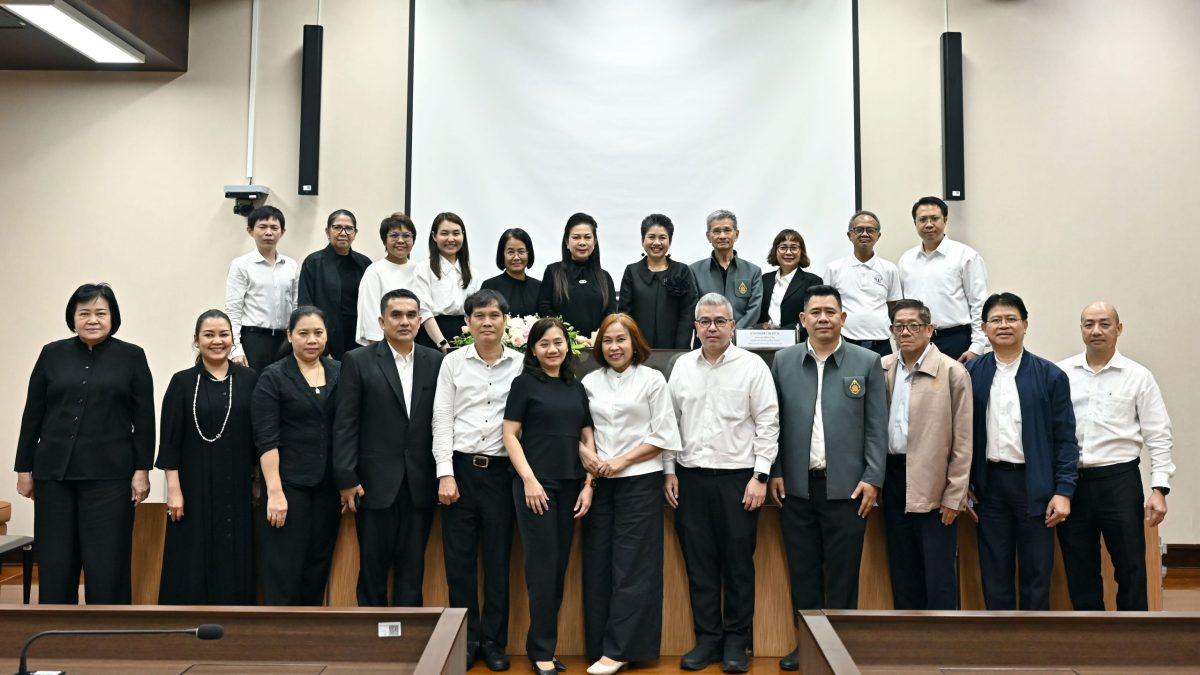
Overall, the lectures covered both policy-level perspectives and practical applications, linking global energy conditions, tensions in the Middle East, and their implications for Thailand, particularly in terms of energy prices, supply chain risks, and broader economic and security impacts. The sessions proposed response approaches that focus on maintaining system-wide balance, rather than relying solely on price-based measures.
She also shared her management experience in navigating uncertainty, applying the Sufficiency Economy framework to achieve sustainable growth alongside cost and risk management, while linking ESG concepts to real-world applications. This reflects the principle that sustainability must be viable within a business context.
Mrs. Gloyta presented the concept of “Sufficiency and Efficiency” in energy and resource utilization, emphasizing that it is not merely about behavioral change, but a way of thinking in managing resources under constraints. Sufficiency refers to using only what is needed, in ways that create value, while Efficiency is about maximizing the value derived from each unit of resource. When applied together, the two concepts enable a more balanced and sustainable approach to energy use.
This framework, she noted, can be applied at all levels, from individuals and households to organizations and the national level, linking everyday behavior with competitiveness, cost management, and the design of more resilient systems.
Mrs. Gloyta concluded by noting that the key question around energy is shifting from “Where can we source more energy?” to “How can we use the energy we already have to its fullest value?”, reflecting a transition from reactive responses to more deliberate and disciplined energy management in an increasingly uncertain world.
Symbol: BCP