
On 28 January 2026, Mr. Chaiwat Kovavisarach, Bangchak Group CEO and President, Bangchak Corporation Public Company Limited, joined a high-level panel discussion at the “Future of Energy Workshop” organized by the MIT Management ASEAN Office in collaboration with the Asian Institute of Technology (AIT). Distinguished panelists included Dr. Siri Jirapongphan, former Minister of Energy, Prof. Yeh Shin cheng, former Minister of Taiwan, Prof. Shobhakar Dhakal, IPCC Coordinating Lead Author, and Dr. Naveed Anwar, CEO, CSI Bangkok. The session was moderated by Prof. Pai Chi Li, President, AIT.
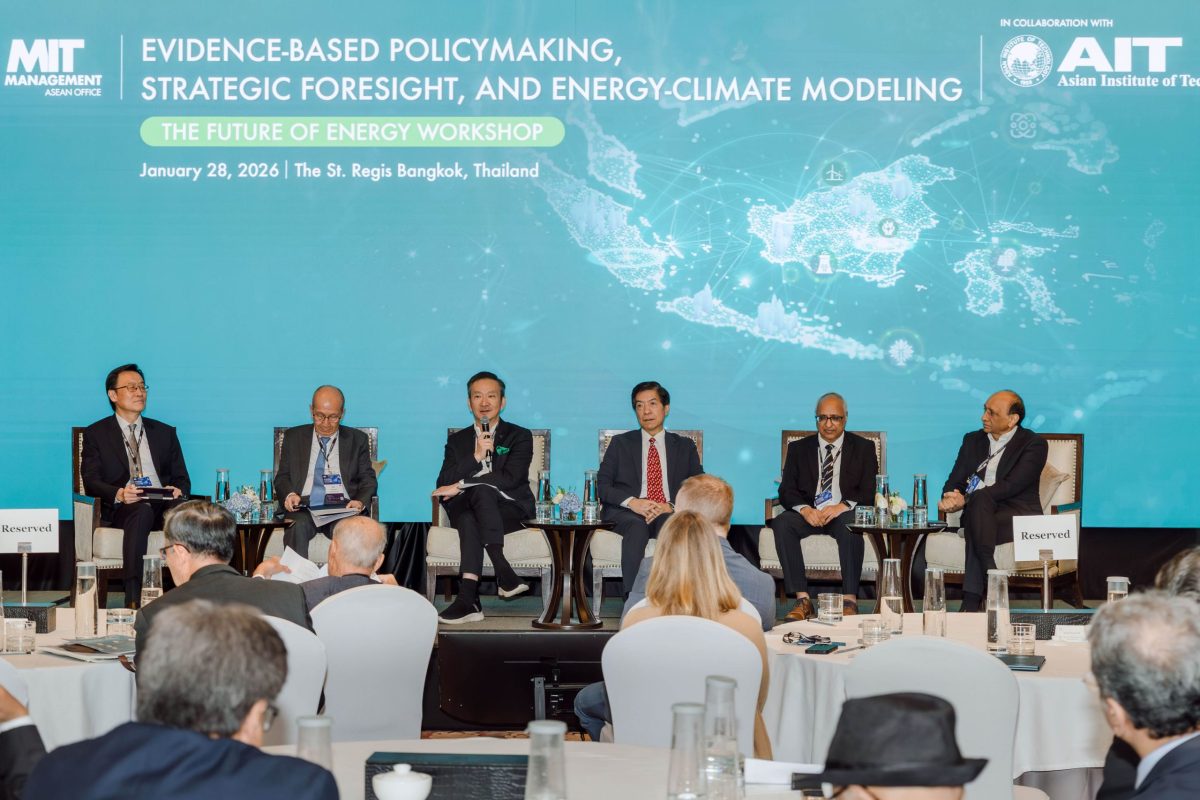
He stated that the global energy system has not evolved through abrupt replacement, but rather along a global energy pathway of Energy Addition, where new energy sources are added over time on top of existing ones, from biomass, coal, oil, and natural gas to renewable energy, to support economic and social growth.
Renewable energy plays an important role in reducing carbon intensity, but still faces limitations related to intermittency, as well as the mismatch between energy production locations and demand, both in space and time. Energy systems therefore must consider the full spectrum of supply sources, transportation, storage, infrastructure, and energy density. These factors explain why certain energy sources cannot directly replace others in the short term.
Today, the world continues to consume approximately 100 million barrels of crude oil per day, reflecting that the global energy pathway still relies on existing energy foundations while new technologies take time to scale. The pursuit of Net Zero, therefore, is not about the immediate elimination of hydrocarbons, but about effectively managing and reducing carbon through energy efficiency, technology, and economic mechanisms. By comparison with COVID-19, the problem was not solved by eliminating patients, but by addressing the virus itself.
He also noted the role of carbon market mechanisms in bridging existing energy systems with emerging technologies. A critical factor is the establishment of robust, transparent, and widely accepted verification and certification standards that enable effective linkage with global markets. Advancing such standards through the Carbon Markets Club reflects a commitment to enhancing the quality of carbon markets and enabling their integration into the global economic system. He further emphasized that carbon mechanisms must be designed with consideration for differing levels of development and energy access, rather than applying a one-size-fits-all approach worldwide.
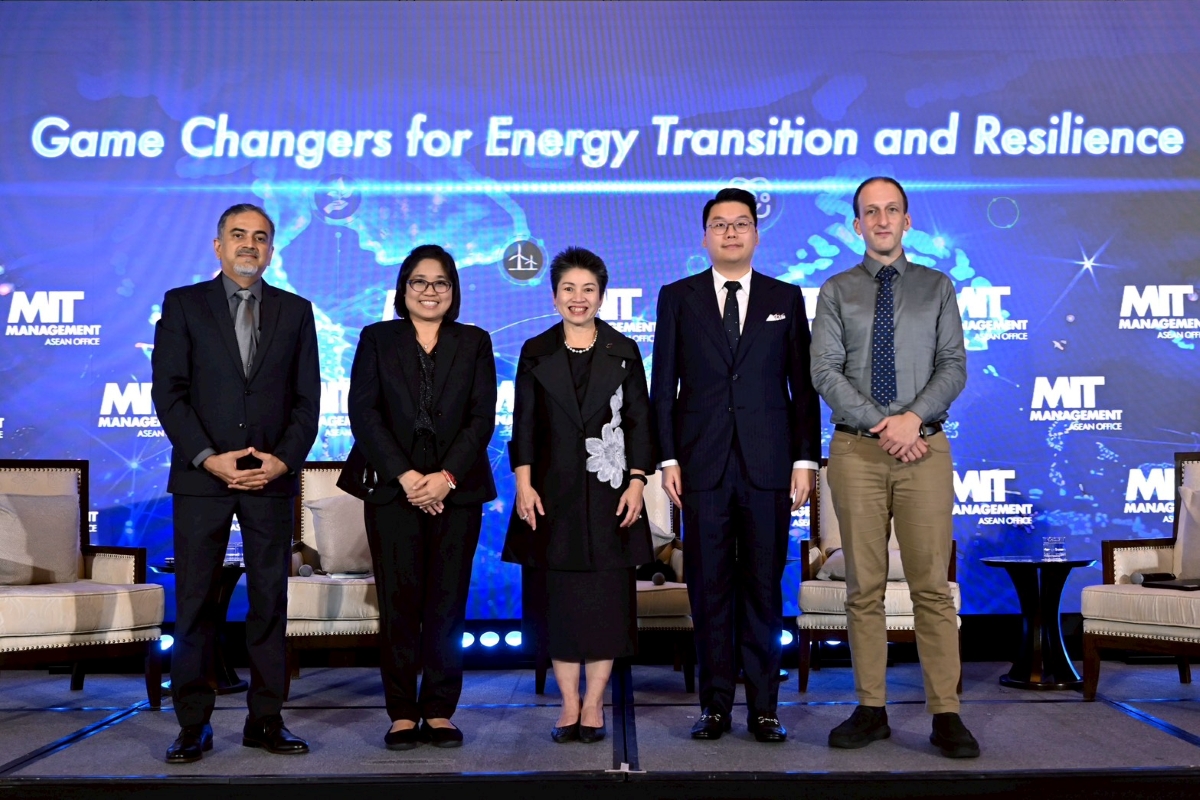
Earlier on 27 January, Mrs. Gloyta Nathalang, Senior Executive Vice President, Sustainability Management and Corporate Communications, Bangchak Corporation Plc., participate in a panel discussion titled “Game Changers for Energy Transition and Resilience” at Powering Southeast Asia Through 2050, organized by the MIT Management Office
Ms. Gloyta shared perspectives that energy transition in Southeast Asia cannot follow a single uniform approach, as countries differ significantly in terms of resources, infrastructure, and readiness. The transition is also not limited to the power sector alone. She cited sustainable aviation fuel (SAF) as an example of a critical solution for reducing carbon emissions from the aviation sector, which requires collaboration across the entire value chain, alongside clear and consistent regulatory frameworks and public-sector policies, particularly blending mandates, to reduce uncertainty and enable real investment. She emphasized that energy transition cannot wait for perfect conditions, but must progress through action, continuous learning, and sustain collaboration via networks such as the Carbon Markets Club.
Symbol: BCP