
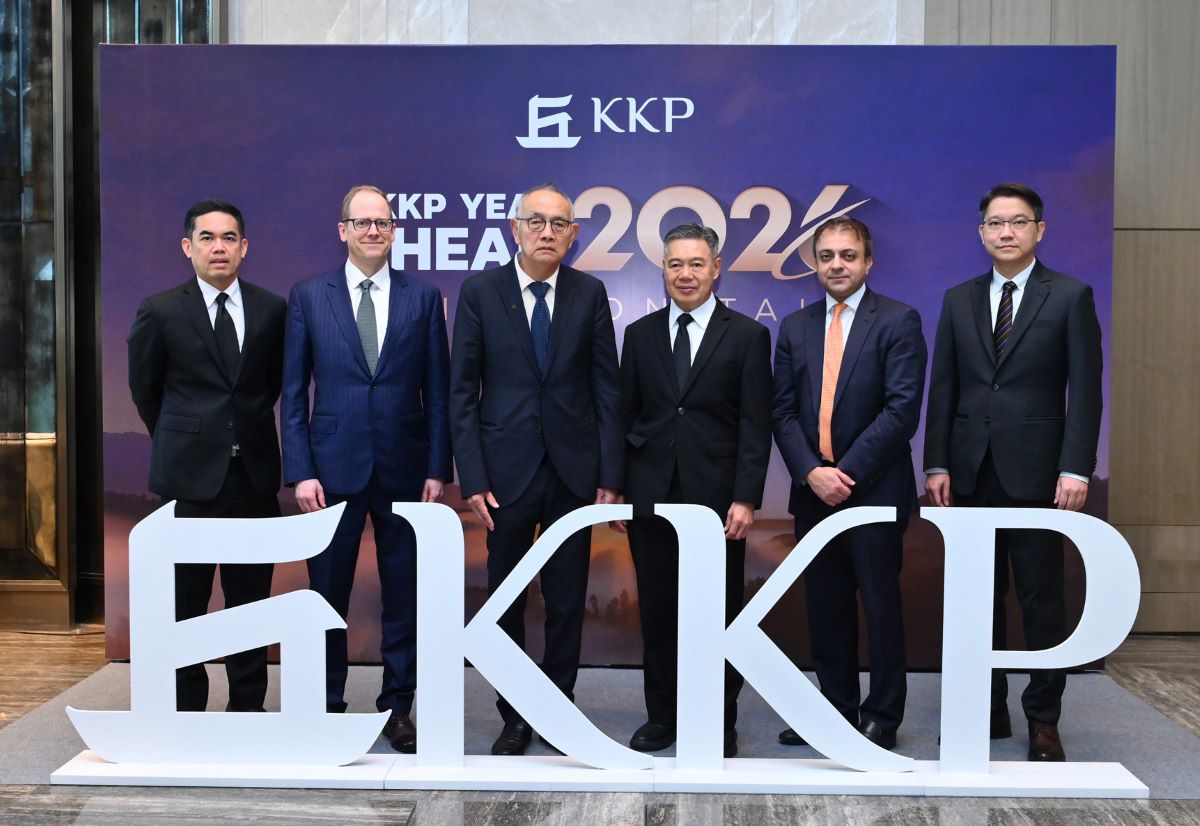
Following a high-level opening on national policy, Kiatnakin Phatra Financial Group (KKP) shifted the focus of its “Year Ahead 2026” seminar toward the frontier of global and domestic outlook. The afternoon sessions featured a powerhouse lineup of strategists from KKP and Goldman Sachs, detailing a 2026 economic landscape. The seminar brought together Andrew Tilton (Chief Asia Pacific Economist, Goldman Sachs Global Investment Research), Shoqat Bunglawala (Head of Multi-Asset Solutions for EMEA and Asia Pacific, Goldman Sachs Asset Management), Dr. Pipat Luengnaruemitchai (Chief Economist, KKP), and Taweesak Paopanlop (Head of the CIO Office, Kiatnakin Phatra Securities) to provide a view of the risks and opportunities facing Thai investors.
Thailand’s 2026 Outlook: Breaking the Cycle of Stagnation
Dr. Pipat Luengnaruemitchai shared a sobering outlook for the domestic economy, noting that Thailand risks becoming an outlier in an otherwise resilient global environment.
“We expect Thailand to remain in a low-growth trap through 2026, with GDP expansion slowing to 1.6% from the previous year’s 2.0%. This deceleration reflects a triple-threat of weakening industrial competitiveness, cautious credit growth, and an incomplete tourism recovery. However, the true ‘wildcard’ will be the post-election landscape; if the new administration can pivot from short-term stimulus to deep structural reforms, we may finally see the catalysts needed to break this cycle of stagnation.”
The Global View: US Resilience and Regional Divergence
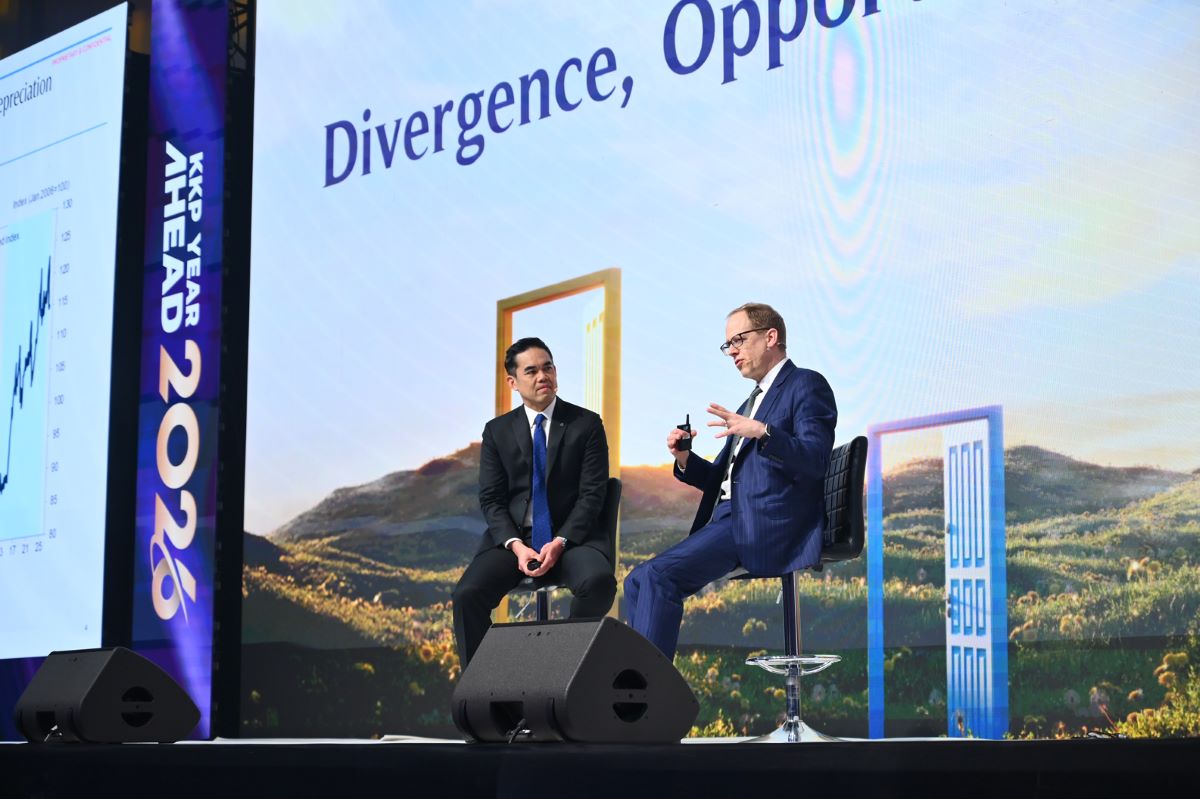
Andrew Tilton of Goldman Sachs Global Investment Research presented a more optimistic global backdrop. He suggested that global growth is likely to be more resilient than the consensus view. The U.S. economic growth is expected to remain firm, supported by multiple drivers: fading drag from earlier tariff concerns, fiscal support through tax measures, easier financial conditions and a strong productivity growth driven by the technology sector. As the Federal Reserve moves toward anticipated interest rate cuts, inflation is expected to moderate without hard landing, paving the way path for U.S. dollar depreciation and more supportive financial conditions.
Outside of the U.S., the macro backdrop is more uneven. While China’s export machine remains resilient, its domestic property slump continues to weigh on growth. Against the global trend, Japan stands out as likely to continue raising policy rates, supported by sustained wage growth and firm services inflation. Elsewhere in Asia, growth has held up better than expected, though exports may face greater challenges in some economies.
Strategic Execution
Shoqat Bunglawala shared insights on the opportunities in 2026:
“As we navigate 2026, we see a global economy poised for improvement, catalyzed by easier fiscal policies in the US and Germany and a sustained surge in AI capital expenditure. While we anticipate some temporary inflationary noise in the U.S. from tariffs, the primary trend remains a return towards the target by the second half of the year. In this environment, our outlook for global equities remains constructive. We are prioritizing U.S. equities, with a quality tilt to enhance portfolio resiliency, and the US technology sector, while simultaneously leaning into fiscally-supportive European equities and the recovery in India. Meanwhile, we also see the advantages of private credit, which continues to offer higher yields than public markets and lower default rates compared with syndicated loans.”
Commitment to Insight
The KKP Year Ahead 2026 seminar reaffirmed Kiatnakin Phatra Financial Group’s role as a trusted source of economic and investment insights. Through its strategic collaboration with Goldman Sachs Asset Management, KKP continues to support investors and business leaders in navigating uncertainty while positioning for sustainable growth in an increasingly complex global environment.
Symbol: KKP