Amidst the surge of modern skincare products boasting scientific claims, consumers are returning to treatments rooted in natural ingredients and tradition for skin health and physical balance. The global organic skincare market has reached approximately USD 47.71 billion, with projected growth of 5 to 9% through 2030, driven by consumer preference for natural ingredients free from synthetic chemicals. In Southeast Asia, the trend is more pronounced, with about 50 percent of consumers preferring natural or organic products and willingness to pay a premium for locally sourced and eco-friendly formulations..
In Thailand, the skincare industry in 2025 has reached approximately USD 3.18 billion and is anticipated to grow at a CAGR of around 5.34% to reach USD 5.04 billion by 2034. This expansion is fueled by the country’s rich biodiversity, spa tourism, and rising consumer demand for clean-label, eco-friendly products. Boutique enterprises and SMEs are embedding traditional Thai botanicals such as turmeric, jasmine, lemongrass, and rice bran oil into modern formulations, combining eco-friendly packaging with herbal wellness practices. These initiatives strengthen local wellness enterprises and position Thailand as a regional hub for spa-driven organic skincare innovation.
Thailand’s women-led enterprises and boutique brands are expanding organic skincare production. Homegrown companies such as Panpuri, Siam Botanicals, and THANN exemplify this trend, creating plant-based, ritual-inspired formulations tailored to domestic and international consumers, while emphasizing eco-friendly packaging and cruelty-free practices. Together, these efforts demonstrate Thailand’s leadership in community-driven, sustainable skincare innovation, ensuring resilience in the wellness economy while preserving cultural heritage.
In Sigi Regency, Central Sulawesi, this trend finds its form in a deeply personal way, rooted in family history. From a humble village, Nelam Ayu Kusuma established Nelamayu Tradisional — a venture that revitalizes the self-care practices of Kaili women while creating economic opportunities based on culture and local ingredients.
From Kaili Women’s Tradition to Modern Skincare
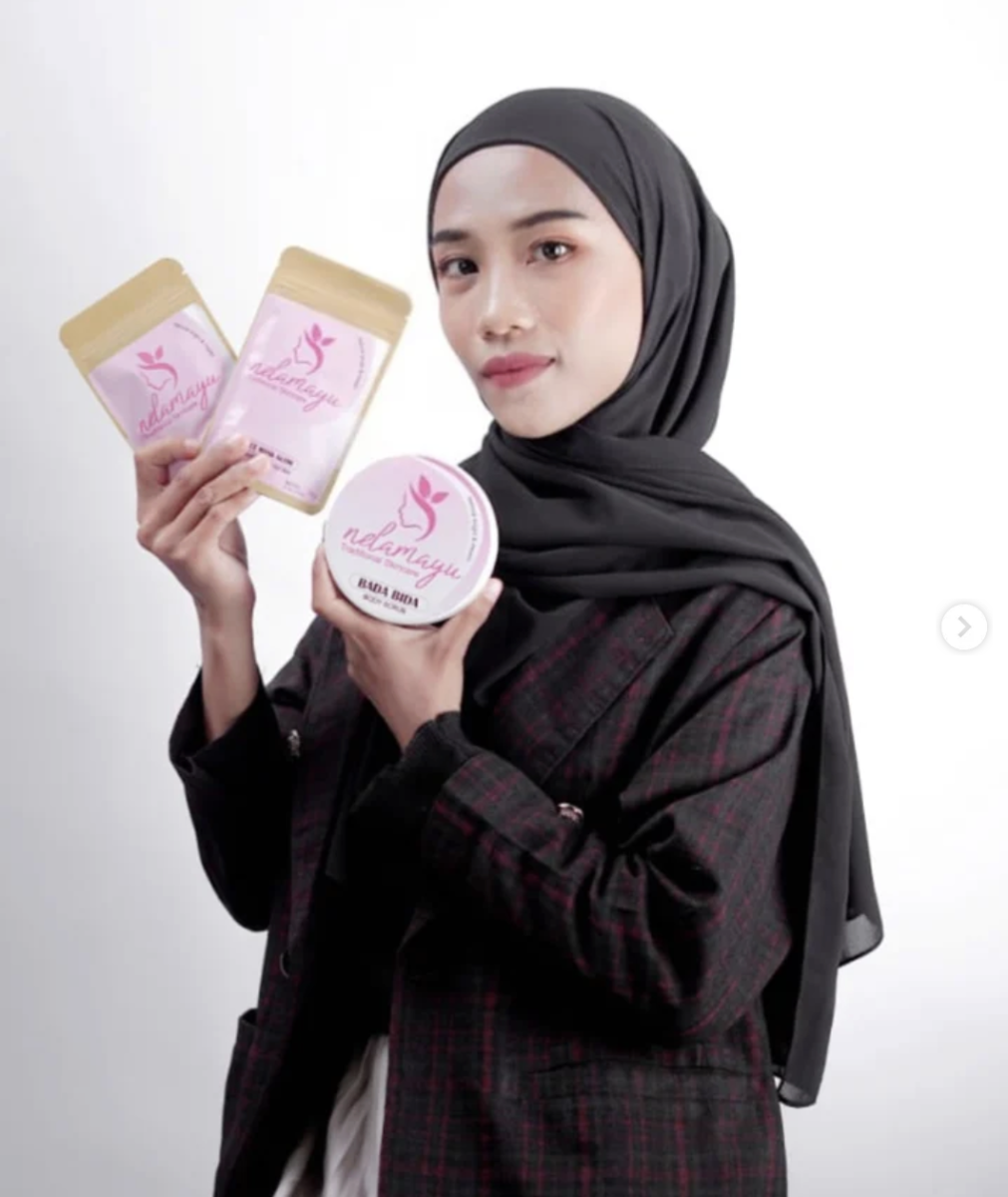
The inspiration for Nelamayu Tradisional stems from a Kaili ritual known as nombungu. In this tradition, brides-to-be undergo body and face treatments using natural ingredients, notably badabida, a type of scrub or mask made from black sticky rice used to smooth and brighten the skin while maintaining physical health leading up to a wedding.
“In the past, badabida was used by brides; their faces were covered with a scrub made from black sticky rice. That is an old tradition of Kaili women,” said Nelam. Originally a simple powder, Nelam modernized badabida into a body scrub to make it more accessible for general use.
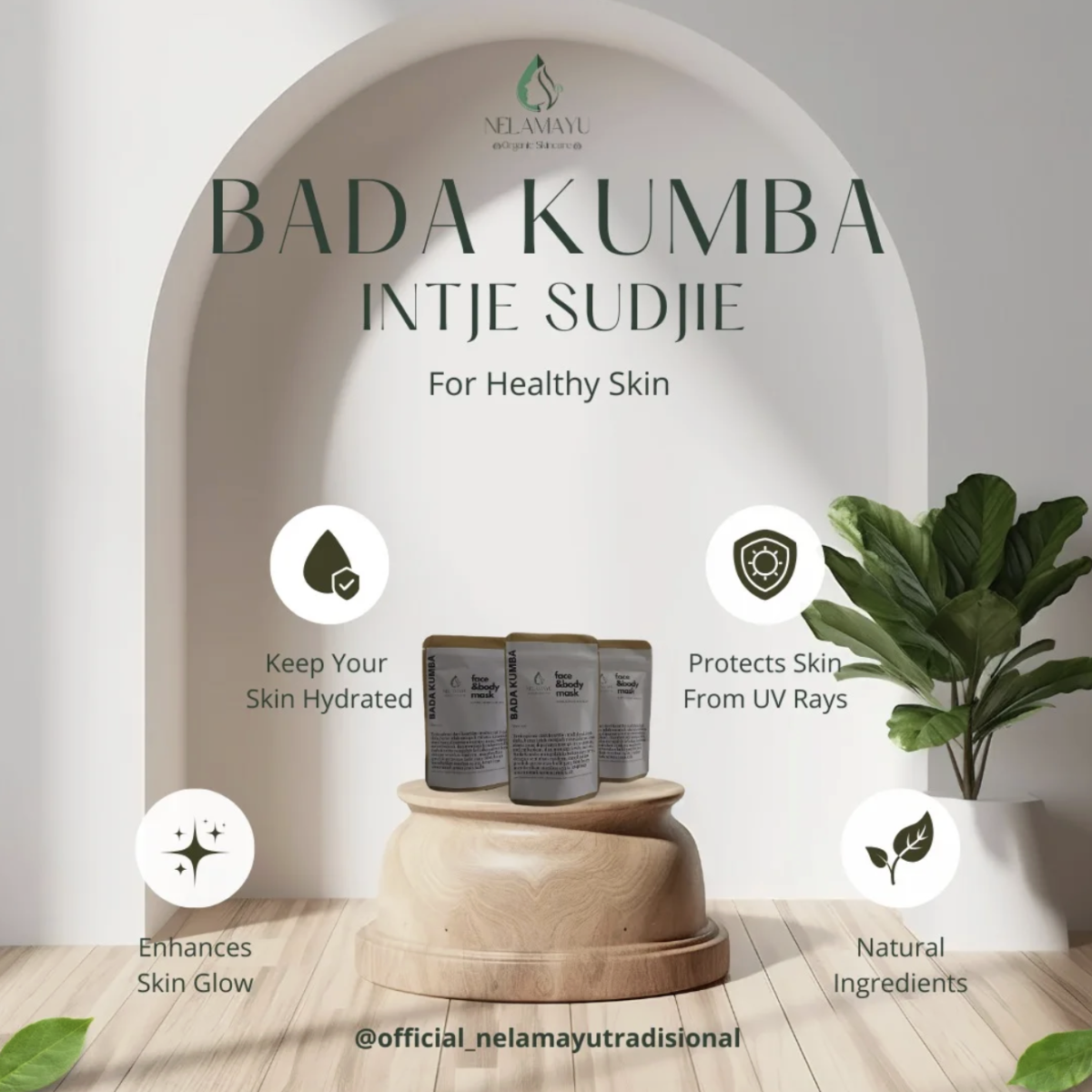
Alongside this, she produces bada kumba, a traditional cooling powder used for babies and children. Its origins trace to Nelam’s grandmother, a village herbalist who crafted cooling powders from natural materials — rice, turmeric, ginger, and local leaves — to care for infants and treat fevers and skin issues during a time when medicine was hard to access. These practices remained alive within the family, inherited across generations.
For Nelam, traditional skincare is not just about aesthetics — her personal experience solidified that belief. Before starting her business, she developed a lump in her breast. Her grandmother suggested using badabida made from black sticky rice. “I was advised to rub the area with badabida regularly. I used it for about two months before I got married, and thankfully, the lump disappeared,” Nelam shared.
This experience led her to study the benefits of her ingredients more deeply. Black sticky rice is known to help improve blood circulation, while turmeric and Javanese ginger possess anti-inflammatory properties. She became convinced that these products are for maintaining the overall health of the skin and body.
Nelam began selling her products in 2018, initially to brides. Gradually, testimonials arrived from users reporting improvements in dry or peeling skin and even relief from irregular menstrual cycles after regular use of badabida on the abdominal area. While these products have not yet undergone comprehensive laboratory trials, the benefits felt by users became the foundation for the business’s growth.
Sustainable Local Supply Chains While Meeting Modern Standards
As the business grew, new challenges emerged — specifically how to maintain traditional authenticity while meeting modern safety and regulatory standards. Since all raw materials consist of spices and natural foods without synthetic chemicals, Nelam pursued hygiene certificates for household supplies rather than manufactured cosmetics.
The supply chain involves local farmers as well. Nelam collaborates with black sticky rice farmers in the West Dolo region of Sigi, absorbing up to 25 kilograms of rice per purchase — providing a consistent buyer for a harvest that has seen declining interest due to market uncertainty. Nelamayu Tradisional further minimizes production waste through a circular model: residual ash from the roasting process is repurposed as household scouring powder, and rice bran from milling is returned to farmers as animal
A turning point occurred when Nelamayu Tradisional joined the incubation program in 2023 held by Gampiri Interaksi. Through six months of intensive mentoring, the business received comprehensive support ranging from institutional strengthening and licensing to innovative product development and marketing strategies. “Our mentoring focuses on nature-based downstreaming. We want to ensure products like Nelamayu Tradisional can grow economically without sacrificing cultural and environmental values,” said Nedya Sinintha Maulaning, a representative of Gampiri Interaksi.
The support also expanded market access, with Gampiri connecting Nelamayu Tradisional to 20 potential partners during Business and Partnership Matching events at the 2023 Festival Lestari.
Preserving Traditions While Increasing Restorative Economy Impact
Currently, Nelamayu Tradisional products are marketed online through various digital platforms and offline through resellers and local partners. The distribution network spans Sigi, Palu, Parigi, Poso, and Morowali, and the products are beginning to enter homestays and hotels as amenities, including trials in hotel chains like Aston and several local inns.
Nelam felt the impact directly. “Before the incubation, my monthly income was around IDR 1 million to 2 million. After the mentoring and product development, it can now exceed IDR 5 million per month,” she noted. Innovations like coffee masks have further expanded her market reach.
According to Nedya, this is a tangible form of restorative economy. “When the environment is protected, natural resources are used wisely, and local communities are directly involved, economic recovery happens naturally. Income rises, culture stays alive, and nature is not exploited,” she explained.
Nelam holds a long-term vision aligned with these principles. She hopes Nelamayu Tradisional can be recognized nationally and internationally as a signature natural beauty brand from Central Sulawesi. “I want this product to be known not just for the results on the skin, but for its story about women, tradition, health, and a connected environment,” Nelam said.
From a simple production kitchen in Sigi, the self-care traditions of Kaili women prove that when the environment is restored and local knowledge is valued, community prosperity can grow sustainably.