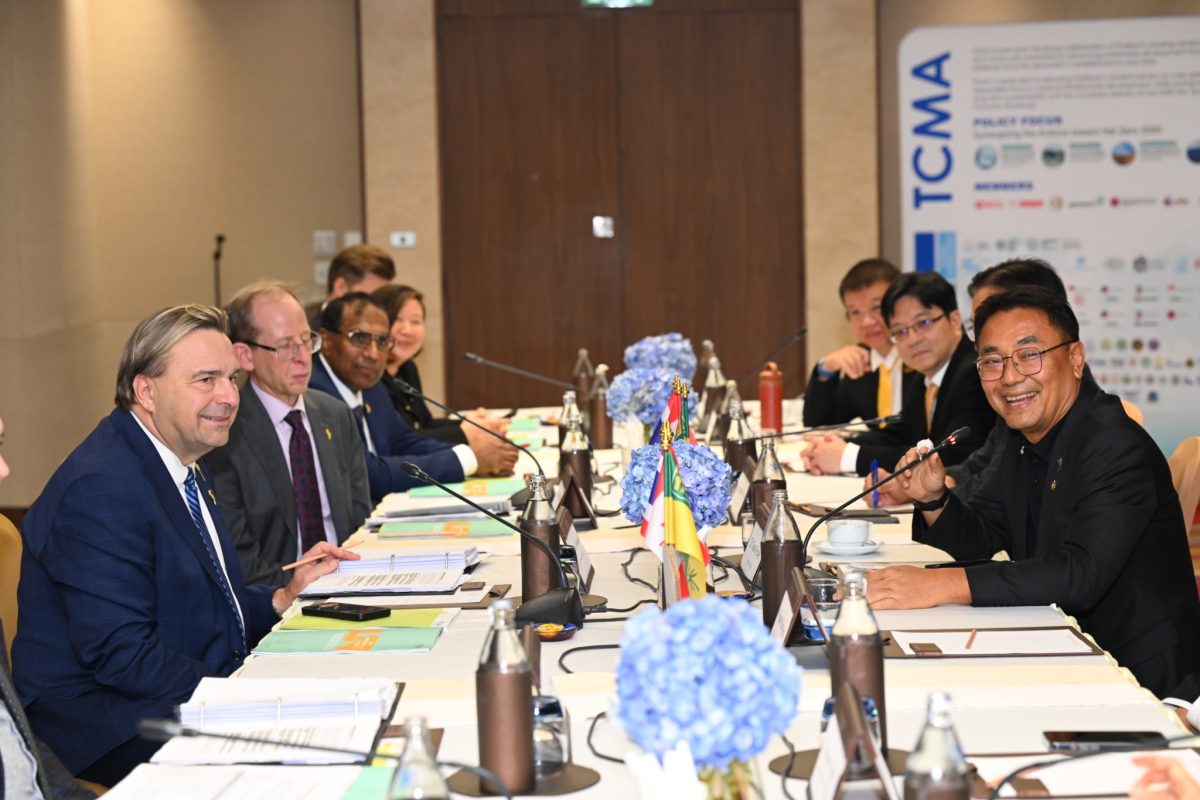
Thai Cement Manufacturers Association (TCMA) is strengthening its collaboration with the Government of Saskatchewan, Canada, the University of Regina, and leading global partners to accelerate the implementation of CCUS (Carbon Capture, Utilization and Storage) technologies in Thailand. The partnership aims to connect international expertise, advanced technologies, and green innovations with Thailand’s cement production sector, enhancing competitiveness while supporting the country’s transition toward a sustainable low carbon economy.
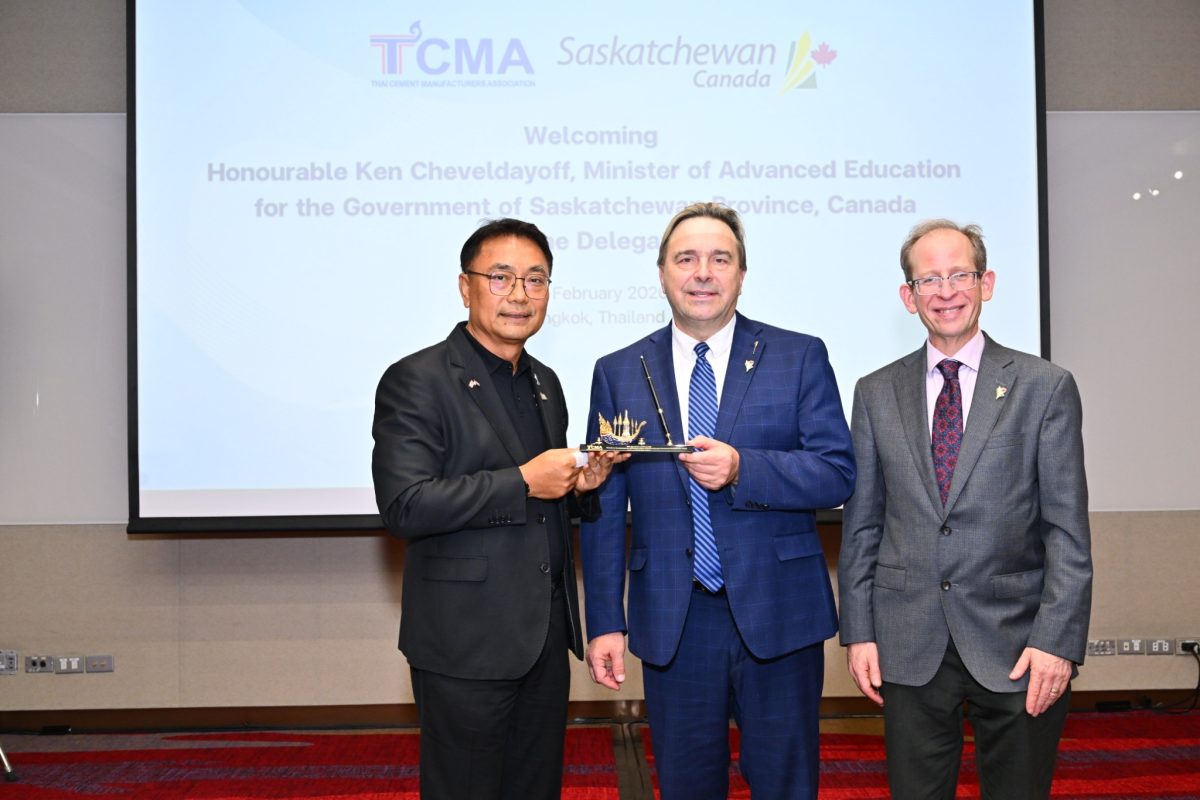
Dr. Chana Poomee, Honourary Chairman of TCMA, revealed following a high-level meeting with the Saskatchewan delegation led by the Honourable Ken Cheveldayoff, Minister of Advanced Education and Professor Jeff Keshen, President and Vice-Chancellor of University of Regina, that both sides welcomed the steady progress achieved since the signing of the Memorandum of Understanding (MOU) in September 2025. The engagement marks a significant milestone in the strategic partnership between Thailand’s cement industry and its international counterparts, with a clear focus on translating technology transfer into real on-the-ground implementation.
“According to Thai cement industry’s roadmap, more than 45% of greenhouse gas emission reductions cannot be achieved through conventional measures alone. CCUS is therefore a critical solution to achieving our Net Zero 2050 target,” Dr. Chana stated.
The current phase of cooperation will begin with the development and testing of carbon capture systems to enhance the industry’s technical readiness. This will be followed by CCU (Carbon Capture and Utilization) initiatives to create economic value from captured carbon such as converting it into new materials or products and, where appropriate, further development toward CCS (Carbon Capture and Storage) for safe long-term storage. The collaboration covers not only technology deployment, but also infrastructure development and regulatory readiness.
A key milestone will be the pilot installation of a Mobile Carbon Capture Unit at a TCMA members cement plant under the “SARABURI SANDBOX” initiative by mid-2026. The project is supported by Environment and Climate Change Canada (ECCC), UNIDO, GCCA, Government of Saskatchewan, and University of Regina through Clean Energy Technologies Research Institute (CETRI), which has extensive experience in CCUS research and innovation.
Minister Ken Cheveldayoff remarked that the partnership reflects the strength of Thailand–Canada collaboration, particularly Saskatchewan’s integration of government, academia, and industry to drive climate innovation. He expressed his pleasure in seeing the Mobile Carbon Capture Unit deployed in Thailand, describing it as a significant step forward, from knowledge exchange to practical implementation, and a strong foundation for expanding cooperation in other areas in the future.
Professor Jeff Keshen added that the University of Regina is proud to contribute to this innovation-driven partnership. Through CETRI, the university brings long-standing expertise in CCUS research, combining academic excellence with industrial application. The collaboration with TCMA extends beyond research and pilot projects to include capacity building, knowledge exchange, and talent development, supporting Thailand’s industrial transition toward a sustainable low-carbon future.
Saraburi Province, Thailand’s main cement production hub, has been designated as a pilot “SARABURI SANDBOX” area to drive its transformation into a low carbon industrial city. Through an area-based implementation approach integrating all relevant stakeholders, the initiative represents the beginning of a structural transition in which industry plays a proactive role, becoming part of the solution to climate change.
This partnership highlights TCMA’s role as the central coordinating body of Thailand’s cement industry, serving as a bridge that connects Canadian climate technologies and innovations with practical applications in Thailand. Through an action-oriented partnership among government, academia, and industry, supported by global networks including ECCC, GCCA, UNIDO, Government of Saskatchewan, and University of Regina, the collaboration establishes a strong systemic foundation for Thailand’s cement sector to confidently advance toward Net Zero 2050, reinforcing its role as a positive force and “part of the solution” in the country’s journey toward a sustainable low carbon future.