
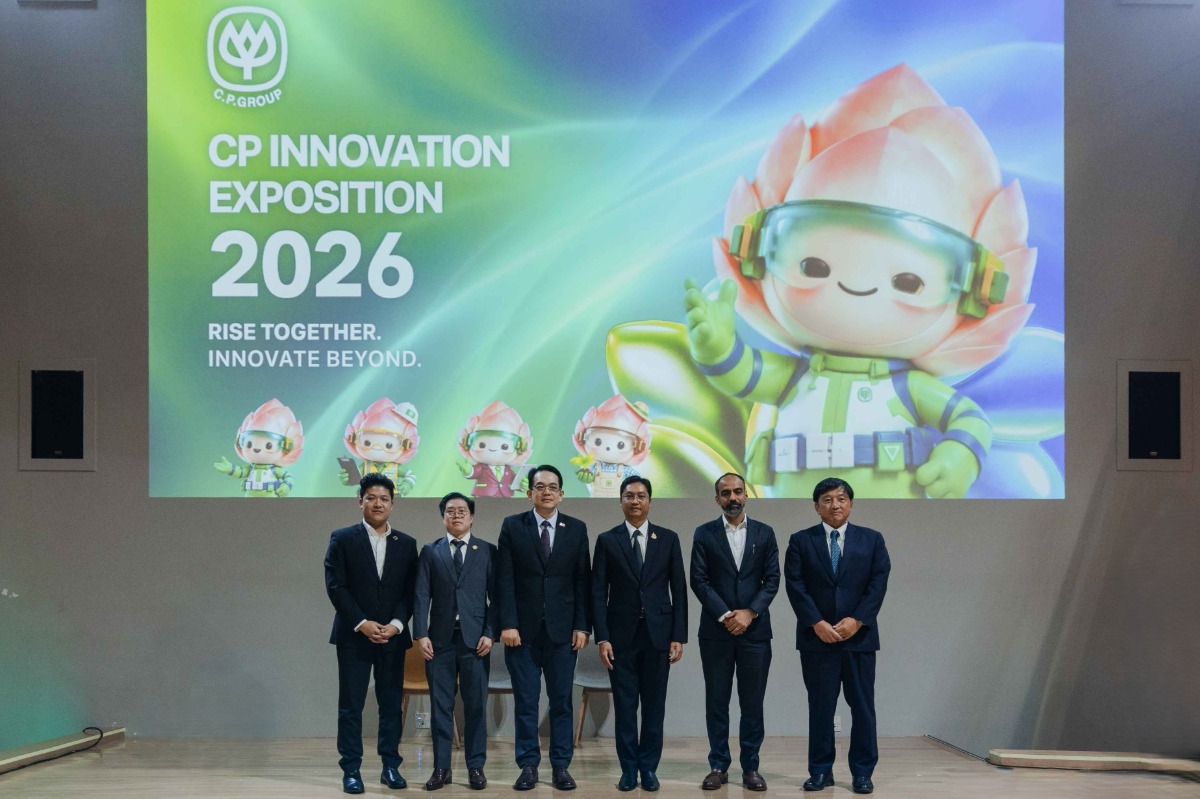
The growth of AI, cloud computing and data centers is increasing the energy demands of Thailand’s digital sector, placing greater emphasis on electricity supply, grid stability and access to clean power. Consequently, efforts to attract investment need to be supported by policies that promote a “green digital economy” and that ensures a fair allocation of costs, without placing an additional burden on general electricity users. “Beyond Sustainability”, a key session at CP Innovation Exposition 2026, brought together public and private-sector representatives to discuss how to support this transition. Participants shared perspectives on using technology to reduce costs, improve efficiency and to support sustainable growth.
Adapting the power market to support digital investment
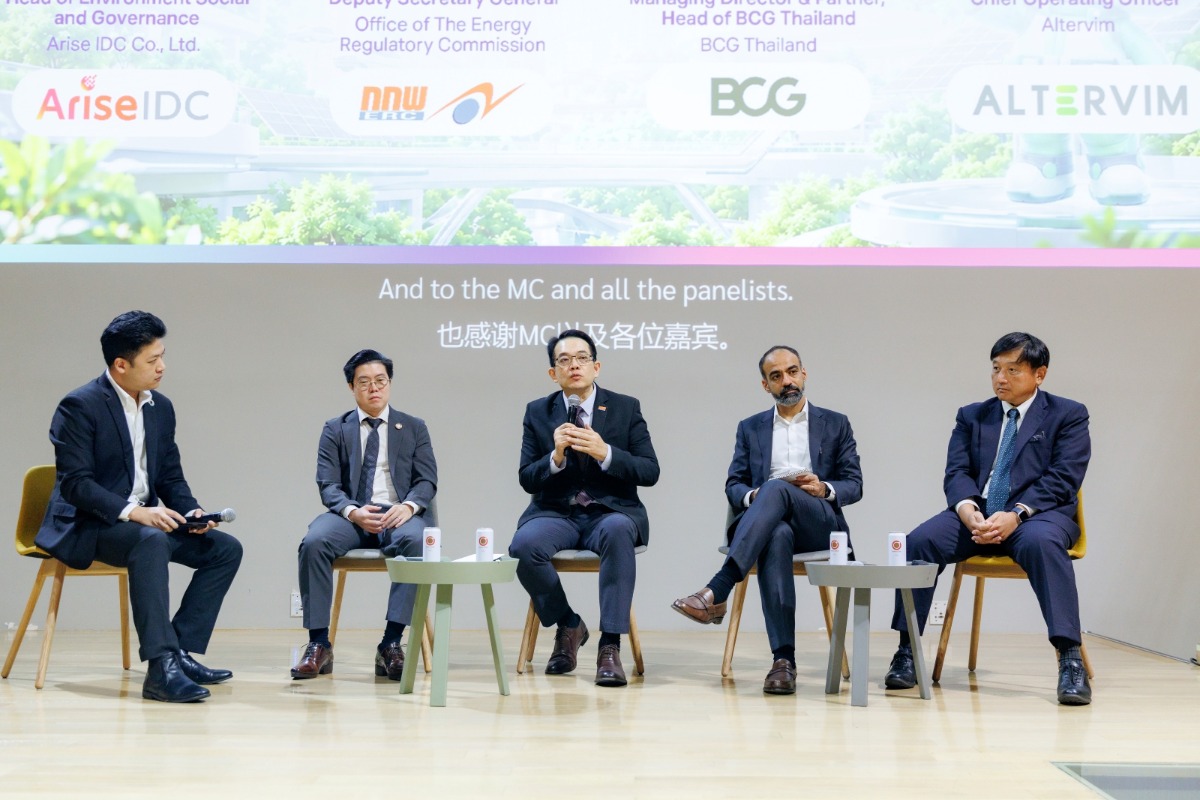
At the “Advancing Thailand’s Power Market for the Digital Economy” forum, Sarat Prakobchart, Deputy Director General of the Energy Policy and Planning Office (EPPO), The Ministry of Energy, discussed the policy direction towards enabling direct electricity trading between private entities and buyers through Direct Power Purchase Agreements (Direct PPA), as well as allowing third-party access (TPA) to the electricity grid in order to meet the demand for clean energy, particularly from data centers, while balancing economic growth, energy security, environmental considerations and fair cost allocation. Meanwhile, Aman Modi, Managing Director & Partner at Boston Consulting Group (BCG) Thailand, suggests that major technology investors should play a greater role in securing electricity to meet their own needs. Therefore, Thailand should establish clear, long-term regulations, expanding on pilot projects and restructuring electricity tariffs to ensure that the burden does not fall on households. Gunn SaengRuang, Deputy Secretary General of the Office of the Energy Regulatory Commission (ERC), discussed the possibility of introducing a dedicated electricity tariff for data centers. This rate would reflect the costs of maintaining reserve generation capacity and grid infrastructure while also accounting for investments required to manage fluctuations in renewable energy sources.
Arise IDC uses AI for energy management
Dr. Tarin Nimmanwudipong, Head of Environment, Social and Governance at Arise IDC, said that the CP Group places importance on developing digital infrastructure, encouraging business units to reduce electricity consumption during peak periods, and promoting public-private partnerships to enhance the resilience of the power system. From mobile banking and social media to cloud computing, they require a robust and stable power infrastructure that can also meet the clean energy requirements of customers on a global-scale.
Establishing data centers in Thailand facilitates local data storage and processing reduces latency and helps the development of a skilled digital workforce. However, energy readiness remains a critical factor for investment decisions. Thus Arise IDC uses AI to automate energy management and to align processing schedules with electricity demand. The facility achieves a Power Usage Effectiveness (PUE) ratio of approximately 1.3 – 1.4 and incorporates a Battery Energy Storage System (BESS) to provide backup power and to perform “Peak Shaving”, reducing reliance on the power grid during periods of high demand. It is working with domestic energy developers to increase clean electricity supply, including through solar farms. Alongside these efforts, Arise IDC is seeking greater policy clarity on Direct PPA, TPA and Utility Green Tariff 2 (UGT2). These factors, along with regulatory requirements, approval timelines and overall energy availability, are critical considerations for investors when deciding whether to invest in Thailand relative to other countries in the region.
CP’s Packaging business expands clean energy use and cuts costs
Dr. Tinnapon Kanlayasiripat, Senior Vice President at CPPC Public Company Limited, part of CP Group’s packaging business, said that sustainability must deliver business results by linking responsible resource use and reduced environmental impact with lower costs, profitability and enhanced competitiveness. To this end, the company employs AI and energy management software with rooftop and floating solar installations, battery storage and smart grids to reduce its reliance on external energy supplies. Its Sikhio factory in Nakhon Ratchasima Province, Thailand’s largest plastic sack manufacturing plant, is implementing the fifth phase of its clean energy project, scheduled for completion in 2027. The project will provide a total electricity generation capacity of 20.98 megawatts, increasing the factory’s daily clean energy operating time from three hours a day in 2023 to 14 hours in 2027 (with the remaining 10 hours of power sourced externally). Furthermore, the company also aims to achieve a cumulative reduction in greenhouse gas emissions of 12,000 tonnes of carbon between 2022 and 2027.
The packaging business group has developed eight intelligent software systems designed to improve efficiency and reduce energy consumption per unit of production. These include Power IoT for monitoring electricity use, Cost AI for tracking daily costs, and Maintenance AI for predicting equipment failures, alongside systems for production planning, logistics and warehouse management. The group aims to increase productivity per unit of energy by 2026 – 2027 while simultaneously investing in workforce development, all guided by the principles that “the cheapest energy is the energy we do not need to use” and “the smartest energy is the energy we can generate and manage ourselves.”
ALL NOW integrates data from more than one million trips
Sanida Manakitpinyo, Chief Commercial Officer of All Now Logistics, said the company serves clients both within and outside the group. Its team of more than 400 employees work alongside transport operators and drivers. The company manages more than one million trips nationwide each year. This operation is supported by five integrated cloud-based systems to exchange data in real time: CMP for trip scheduling and predicting transport times; VMP for managing vehicle, driver and documentation data; TMS for route planning (integrated with Google Maps); SLE uses GPS data and AI to analyze driving behavior; and the TPS application which allows drivers to update their status, thereby reducing the need for follow-up calls.
The combined data is used to evaluate service performance against service-level agreements (SLAs), analyze operations and train AI. The cloud-based system uses a microservices architecture, breaking functions down into smaller, specialized services that can support an increasing volume of shipments. Furthermore, the platform is open for partners to test or co-develop solutions. ALL NOW Logistics aims leverage this digital infrastructure to support growth through 2027, enhancing operational agility, reducing costs and ensuring precise and transparent shipment tracking, while maintaining high service standards and reducing carbon emissions.
Symbol: TRUE