
The Co-Chairman of the Joint Standing Committee on Commerce, Industry and Banking (JSCCIB) highlighted the low-carbon transition as both an investment opportunity and a new source of national competitiveness. He called for accelerating the “Reinvent Thailand” agenda to connect the public sector, private sector, and financial institutions, turning policy into execution while bringing SMEs into the low-carbon value chain. He also emphasized the role of Bangkok Business Summit 2026 as a platform to showcase Thailand’s economic potential ahead of the IMF–World Bank Group Annual Meetings and its ASEAN leadership in 2028.
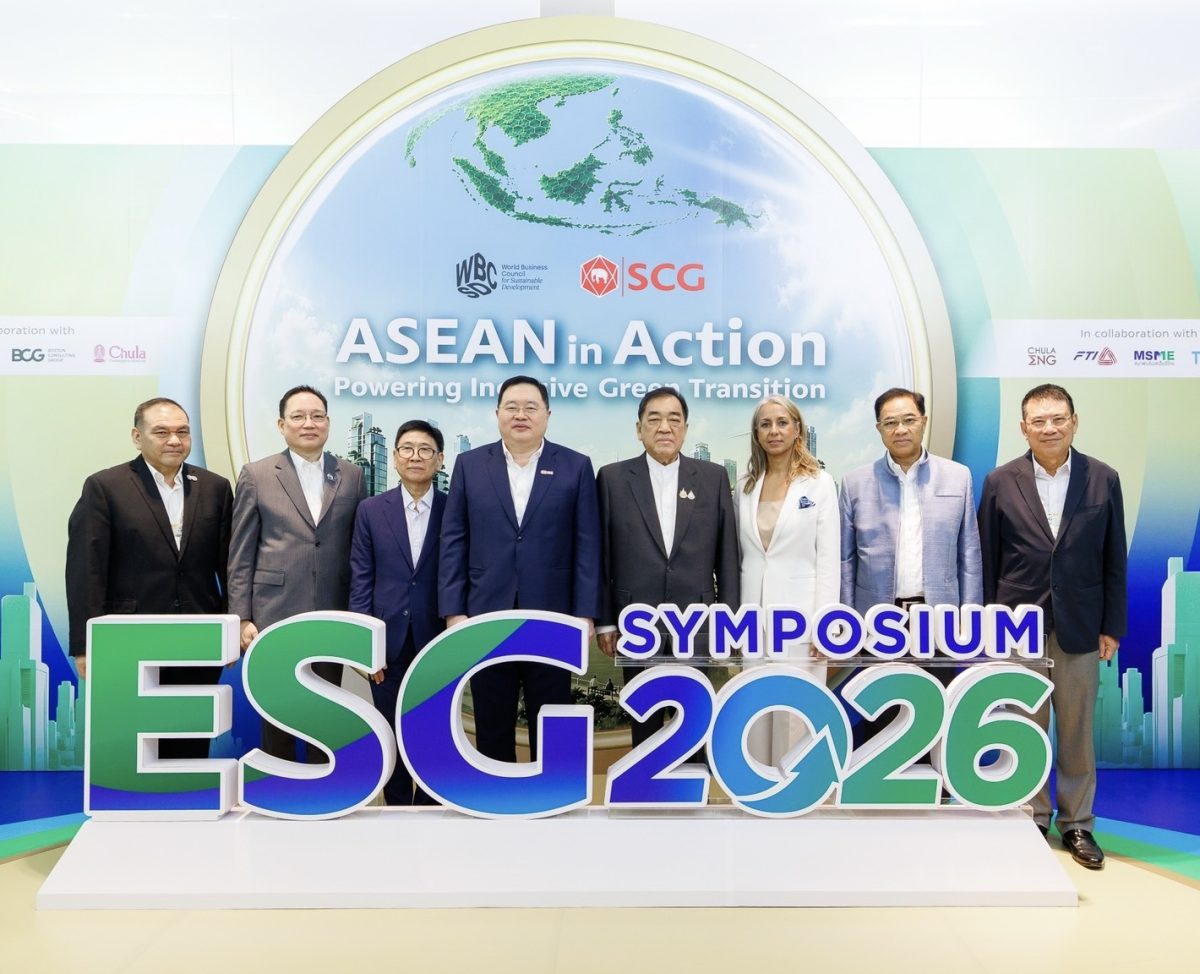
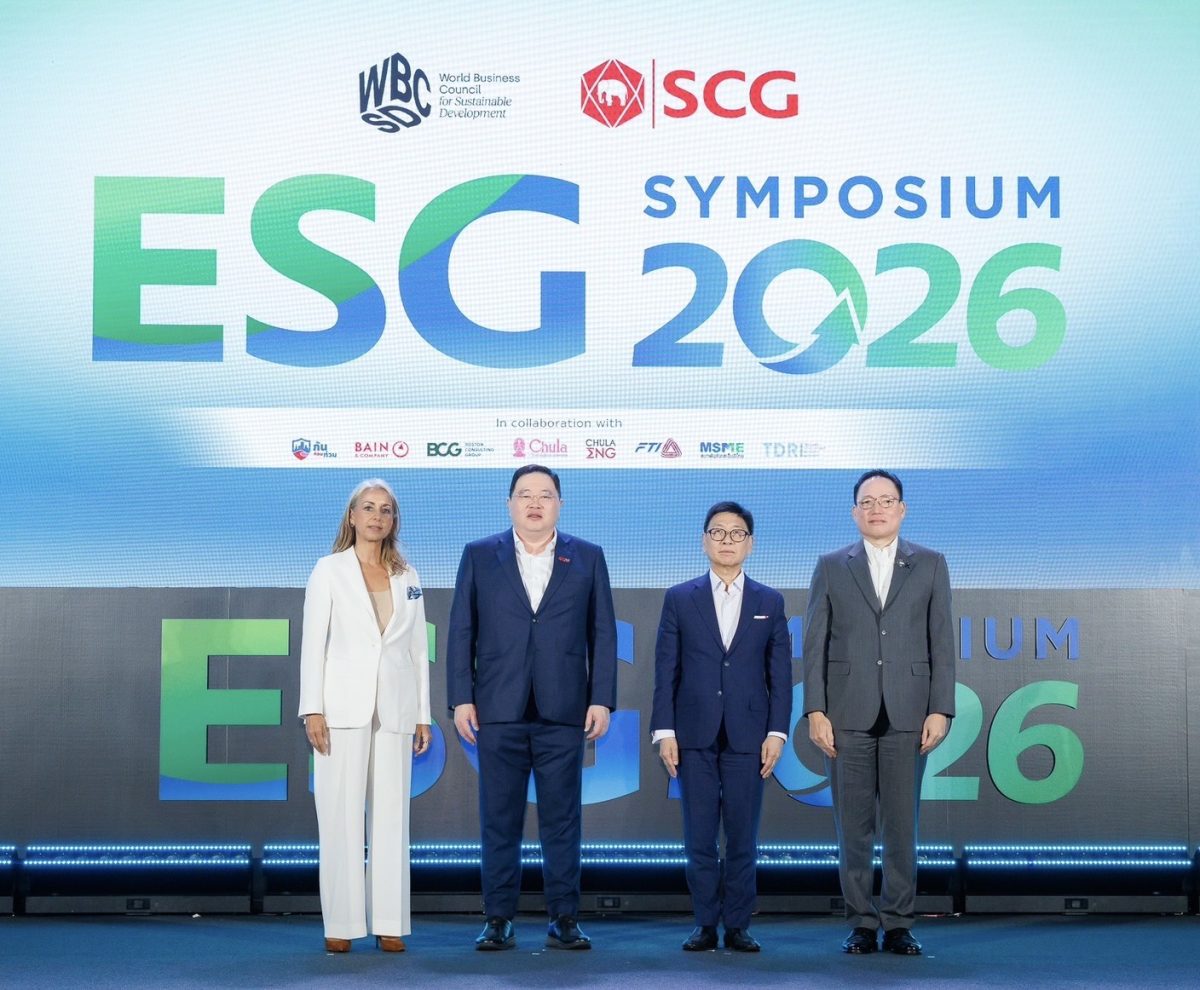
Payong Srivanich, Co-Chairman of the Joint Standing Committee on Commerce, Industry and Banking (JSCCIB), delivered a keynote address, “Reinvent Thailand for a Low-Carbon Future,” at ESG Symposium 2026 under the theme “ASEAN in Action: Powering Inclusive Green Transition.” He emphasized that Thailand’s low-carbon transition should not be viewed only as an environmental obligation but as a critical agenda for the country’s future competitiveness, investment attraction, and the nation’s growth in the next era.
Payong stated that Thailand is currently at an economic crossroads. The growth model that has served the country for decades, driven by cost competitiveness, exports, tourism, and integration into global supply chains, is becoming increasingly insufficient in a rapidly changing world. Reflecting this challenge, the IMF projects Thailand’s medium-term economic growth at around 2.4%, compared with approximately 5% for Emerging Market Asian economies. Thailand therefore needs to develop a new growth engine while addressing key structural challenges, including the informal economy, declining competitiveness, and government effectiveness. At the same time, the country must strengthen its resilience to climate change to ensure sustainable and long-term economic growth.
He noted that, as global investment rules and supply chains continue to evolve, investors are increasingly looking for safe, efficient, and low-carbon destinations. Countries that offer stability, quality infrastructure, competitive costs, and access to clean energy will be better positioned to attract investment from next-generation industries.
“Low carbon is no longer separate from competitiveness. Increasingly, low carbon is competitiveness. Therefore, the low-carbon transition is not simply an environmental agenda. It is both an investment agenda and a competitiveness agenda for the country,” Payong said.
Against this backdrop, Thailand should transform climate investment into an opportunity to build the country’s next growth engine. Key areas include clean energy, energy storage systems, energy efficiency, low-carbon industrial processes, electric mobility, climate-smart infrastructure, and new technologies. These investments will not only attract new investment and create future industries but also strengthen Thailand’s resilience against future risks.
According to the World Bank, Thailand will require approximately USD 219 billion, or around THB 7.3 trillion, in combined climate mitigation and adaptation investment between 2025 and 2050 to achieve its climate and decarbonization goals. At the same time, Thailand aims to increase total investment from around 23% to 30% of GDP, underscoring the importance of climate investment as a key driver of long-term economic growth.
Payong stressed that achieving this transition will require a mechanism that aligns all sectors toward common goals. He highlighted “Reinvent Thailand” as a platform for collaboration among the government, private sector, financial institutions, and technical agencies, ensuring that policy development, investment decisions, and the removal of business bottlenecks are guided by the same facts, data, and desired outcomes. The key word, he emphasized, is execution, because the transition from policy to a low-carbon economy can only succeed when it translates into real investment and real transformation.
Payong further underscored that SMEs must be part of the transition. Large corporates have a critical role to play in helping SMEs and suppliers adapt together across the supply chain, from providing knowledge and technical support to developing common standards and digital tools that reduce the cost, making carbon measurement and reporting reliable and affordable. This should be accompanied by efforts to improve energy efficiency and advance decarbonization, as well as procurement incentives that reward suppliers that improve.
He added that credible transition plans and verified data should be linked to better access to finance, enabling financial institutions to assess and support businesses more effectively. This will help SMEs gain easier access to funding, accelerate their transition, and remain competitive under the new rules of the global economy.
Looking ahead, Mr. Payong highlighted the upcoming Bangkok Business Summit 2026: Reinvent THAILAND, Resilient ASEAN, to be held on September 3, 2026. The summit will bring together public and private sector leaders to advance the agendas of “Reinvent Thailand” and “Resilient ASEAN” while showcasing Thailand’s strengths and transformation pathways to a global audience. It will also serve as a stepping stone toward the IMF–World Bank Group Annual Meetings under the theme “Thailand’s New Horizons: Empowering People, Building Resilience” in October and help lay the foundation for deeper regional cooperation and Thailand’s leadership role in ASEAN in 2028. These forums form part of the same journey, from domestic dialogue and agenda-setting to concrete action, investment, and stronger connections with regional and global economic platforms.
Symbol: SCG