
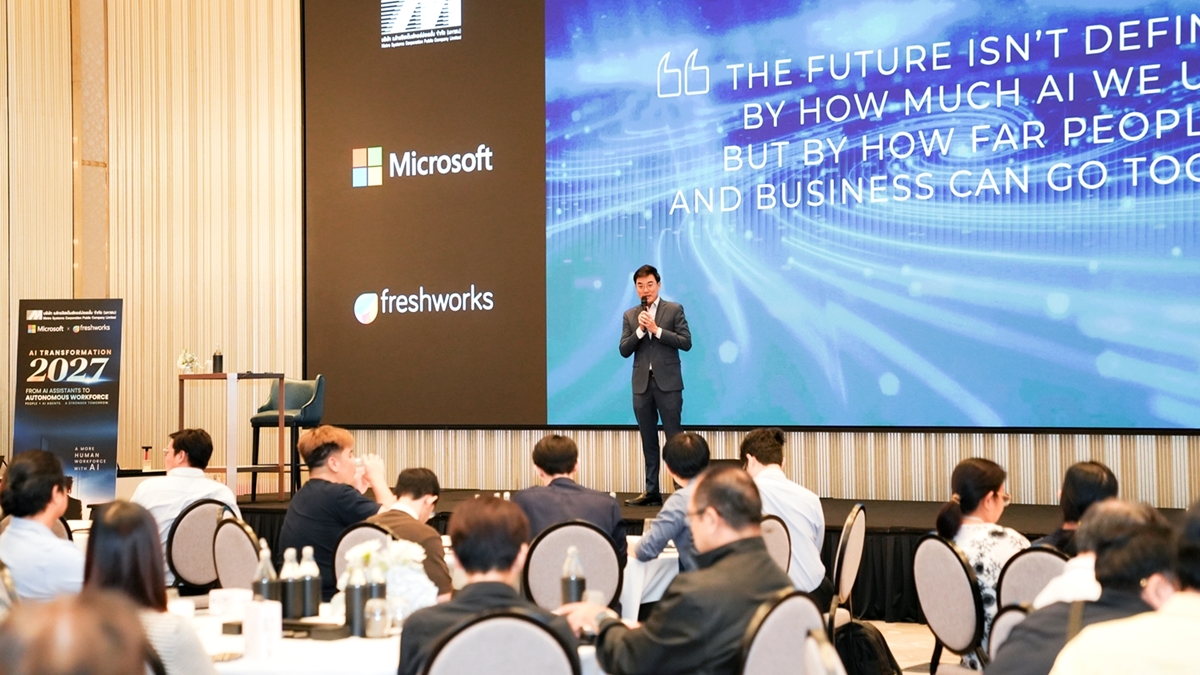
Metro Systems Corporation Public Company Limited (MSC) hosted the seminar “AI Transformation 2027: From AI Assistants to Autonomous Workforce” on Friday, November 13, 2026, in Ballroom 2B at The Ritz-Carlton, Bangkok. The event brought together business leaders and IT executives to explore the direction of work in 2027, when AI will no longer serve merely as a question-answering assistant but will evolve into a colleague (AI Coworker). Through keynote sessions, a panel discussion, and a technology exhibition, the event focused on a central question: not “how do we begin using AI,” but “how do we make AI deliver real business outcomes and scale across the enterprise.”
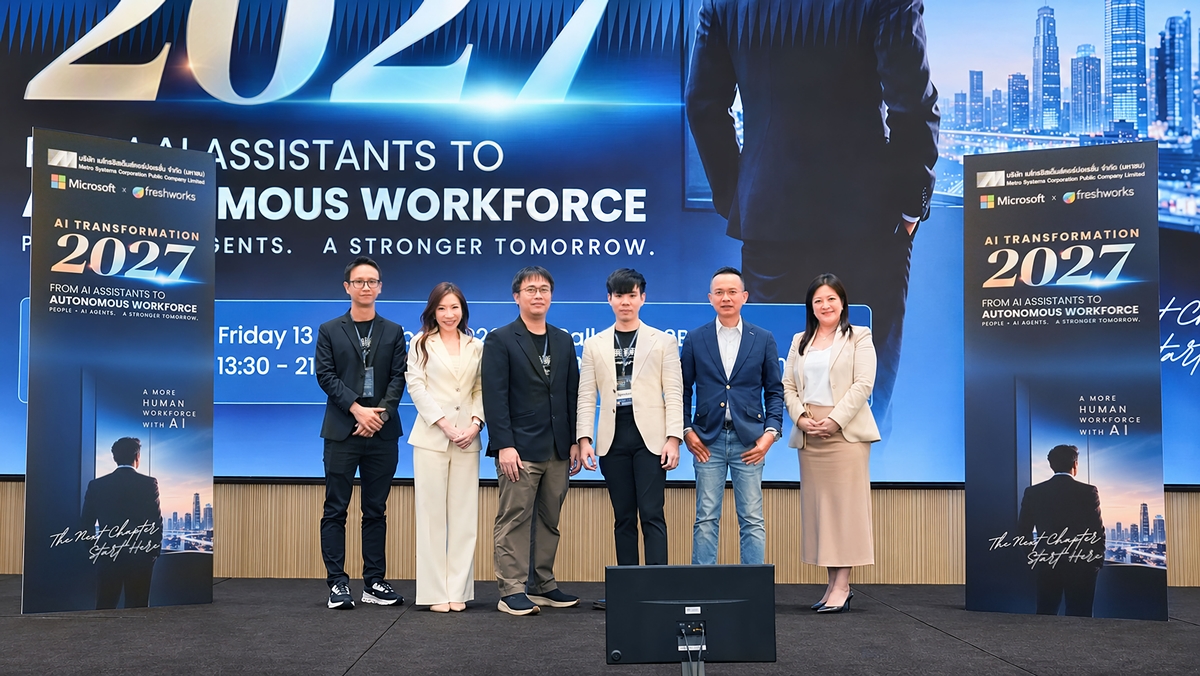
Under the AI Workforce concept, the event outlined AI’s evolving role from AI Assistant to AI Coworker and Enterprise AI Agents, meaning AI systems that can be assigned tasks, operate across systems, and connect with business processes. The prevailing view is that in 2027, organizations will need to manage not only their people, but also the Human Workforce, the AI Workforce, and AI Operations simultaneously, with appropriate emphasis on defining scopes of work and establishing effective governance.
Attendees received the latest updates on the direction of Microsoft 365 Copilot, including Cowork and Autopilot, as well as approaches to building Enterprise AI Agents with Copilot Studio and Power Platform to integrate AI into organizational workflows. Another topic of great interest to executives in the era of AI at Scale was cost management and outcome measurement through the AI FinOps framework, ensuring that investment and expanded adoption remain aligned with business objectives.
Another issue raised was a question many organizations are facing: why more than 60% of organizations have yet to successfully generate value from AI. The session highlighted the gap between possessing the technology and applying it in real work, known as the Last Mile Trap. It also encouraged attendees to assess cost-effectiveness and measurement methods alongside the challenges of Data Debt and the Semantic Gap, referring to accumulated data liabilities and gaps in data meaning. It further addressed data and AI governance so that scaling from pilot projects to enterprise level remains tied to business goals.
The panel discussion “AI Workforce in Action” examined how much work AI can realistically perform in place of humans, emphasizing the role and expertise of personnel in working alongside AI. It featured case studies in IT service desk support, employee self-service, IT operations, and workflow automation, illustrating the shift from traditional IT services to AI-first service delivery.
In addition, a session covered integrating Freshworks with AI to elevate Employee Experience, enabling employees to get help quickly through conversational interfaces and reducing the burden on service teams. The event also featured booths from Microsoft, Freshworks, and outsourcing services, giving attendees the opportunity to discuss their challenges and technology adoption approaches directly with the teams.
The closing session summarized the transition from Digital Transformation to AI Transformation and the core capabilities organizations must prepare to compete in 2027: strategy, data, platform, governance, and people. It also encouraged attendees to consider which of the many AI systems their organizations use actually create value in real work, and outlined the direction of IT services toward AI Managed Operations, meaning IT management supported by AI.The insights from the event link tool selection to data readiness, workforce expertise, performance measurement, and governance, offering a framework for planning human-AI collaboration in 2027. As AI agents proliferate within organizations, companies should maintain visibility and oversight of all deployments, while prioritizing both Data Security and AI Security.
Symbol: MSC