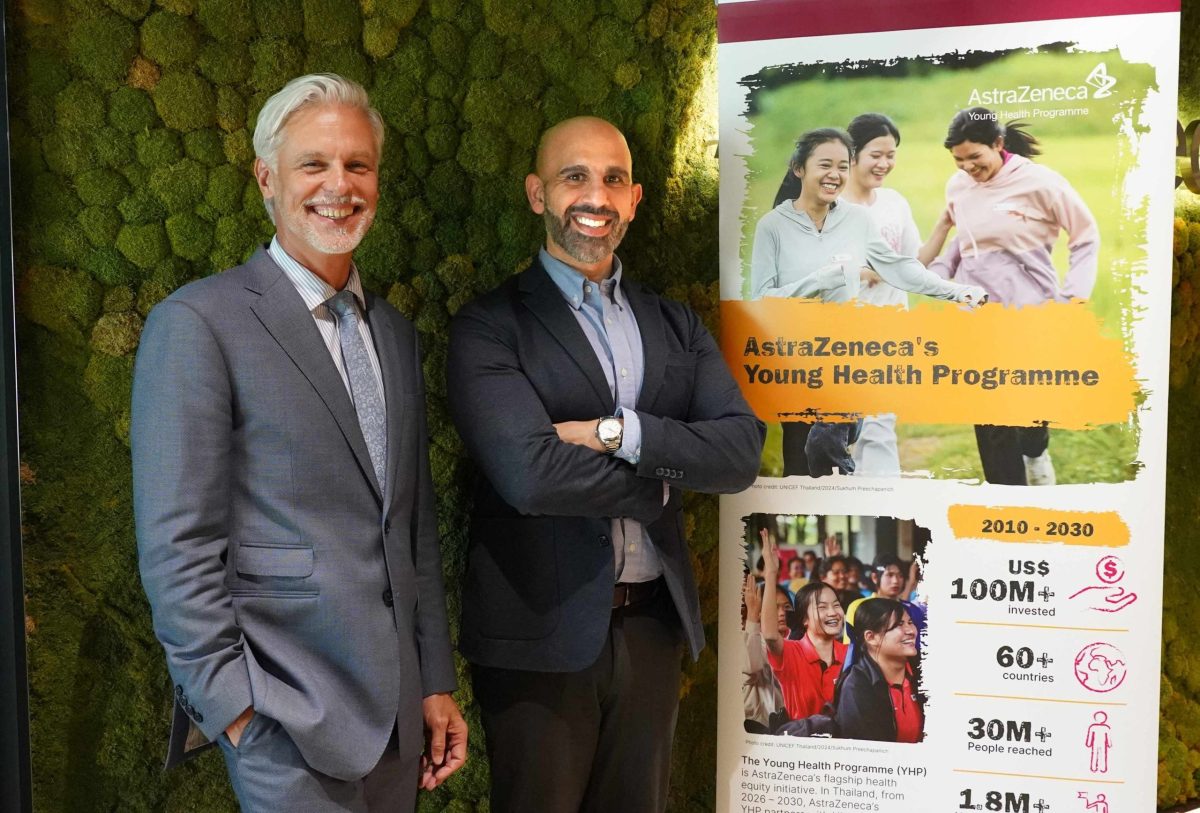
AstraZeneca has announced a total investment of more than US$100 million in its Young Health Programme (YHP) between 2010 and 2030, supporting its commitment to advancing health equity in more than 60 countries.
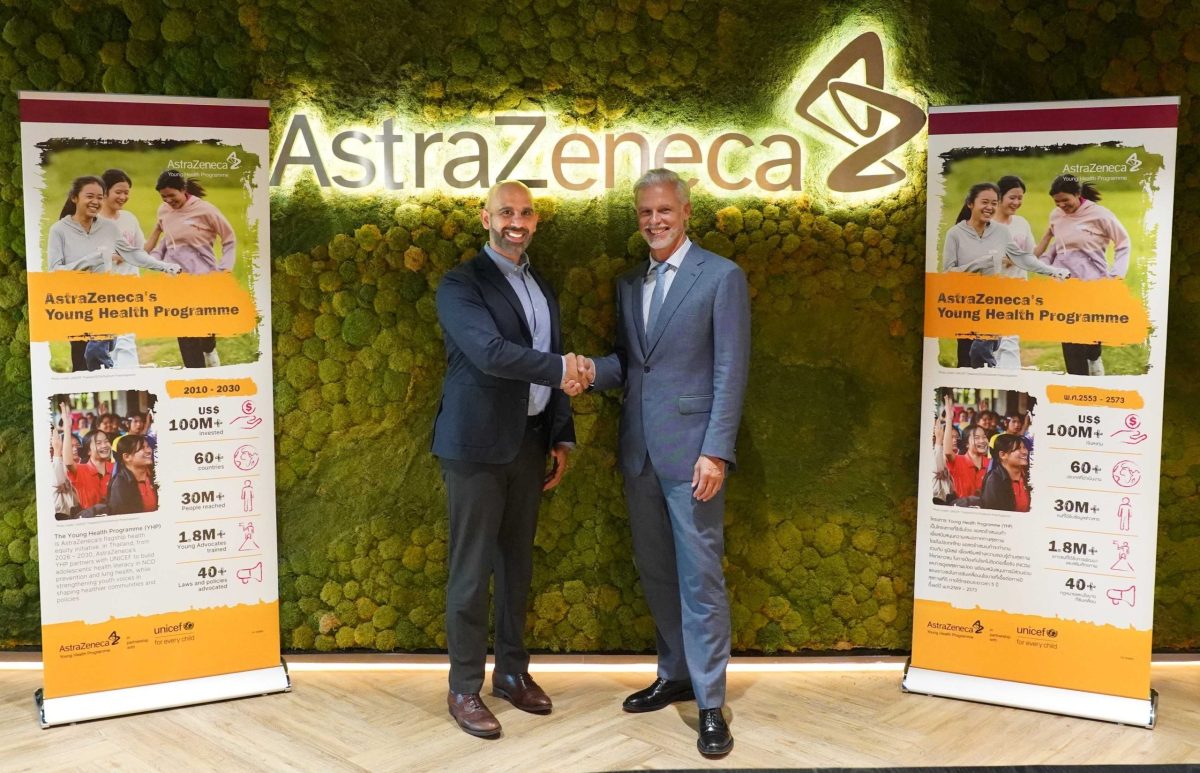
As part of the next phase of YHP, AstraZeneca and UNICEF are expanding their global partnership to address health challenges facing children and young people in local communities. In Thailand, the partnership will focus on building health literacy and healthy behaviours among adolescents, preventing non-communicable diseases (NCDs), strengthening policies and services that support children and young people’s health. It will also address the growing health risks linked to air pollution through awareness raising, health education and school-based lung screening.
The programmes will be implemented in collaboration with the government agencies including the Ministry of Public Health, Society and Health Institute, Ministry of Education, Bangkok Metropolitan Administration, as well as youth groups, healthcare providers and civil society organizations including Thailand Clean Air Network.
“Through the Young Health Programme, AstraZeneca is investing in the long-term health of young people and the communities around them,” said John Serry, Country President of AstraZeneca Thailand. “UNICEF brings deep expertise in children’s and adolescent health, while AstraZeneca brings sustained commitment and investment. Together with government agencies and local partners, we look forward to turning that shared ambition into meaningful action. In Thailand, we will begin with lung health and air pollution while supporting the broader knowledge, skills and environments young people need to prevent NCDs and lead healthier lives.”
The partnership comes at a time when children and young people in Thailand face a range of health challenges that can affect their development and well-being well into adulthood. Poor nutrition, a key risk factor for NCDs, remains a concern, with 13 per cent of children under five stunted, according to Thailand’s 2022 Multiple Indicator Cluster Survey. At the same time, overweight and obesity among children and adolescents are rising. Among children aged 6-14, the proportion of children who are overweight or obese has more than doubled over the past 25 years, from 6 per cent to 13 per cent, while 14 per cent of adolescents aged 15-18 are now overweight or obese.
Air pollution poses another significant threat to children’s health. UNICEF estimates that around 11 million children in Thailand are highly exposed to PM2.5. Children are particularly vulnerable because their lungs, brains and other organs are still developing and exposure can begin even before birth, with consequences that last a lifetime.
“Every child has the right to grow up healthy, but millions of children still face risks that are entirely preventable, from poor nutrition to the air they breathe,” said Ken Legins, UNICEF Representative for Thailand. “The habits and knowledge children and young people build now will shape their health for the rest of their lives. This partnership is about acting early, equipping adolescents to make healthier choices, and supporting schools, communities and environment that make those choices possible.”
Globally, NCDs are the leading cause of death, and many of the behaviours and risk factors associated with NCDs begin during adolescence. This makes early prevention and investment in young people’s health critical to improving health outcomes over the long term.
The Young Health Programme is AstraZeneca’s flagship health equity initiative and has, over the past 15 years, directly reached 23 million young people across more than 60 countries. The programme has trained more than one million people and supported youth advocates to positively shape 29 laws and policies worldwide. Research by RTI International found that YHP generates US$4.30 in social return on investment for every US$1 invested.
The next five-year phase of YHP, from 2026-2030, aims to reach an additional 10 million young people, train 800,000 youth advocates and support youth-led efforts to positively shape 17 public policies worldwide. The programme places particular emphasis on health equity, climate responsiveness, and empowering young people as agents of change.
Through the global partnership with UNICEF and a wider network of non-governmental organisations, including One Young World and founding partner Plan International, AstraZeneca’s Young Health Programme will continue supporting young people to build healthier habits, strengthen the environments that shape their health and advocate for positive change in their communities and countries.