
UOB-hosted forum brings together public and private-sector perspectives on changing markets, supply chains, technology and sustainability
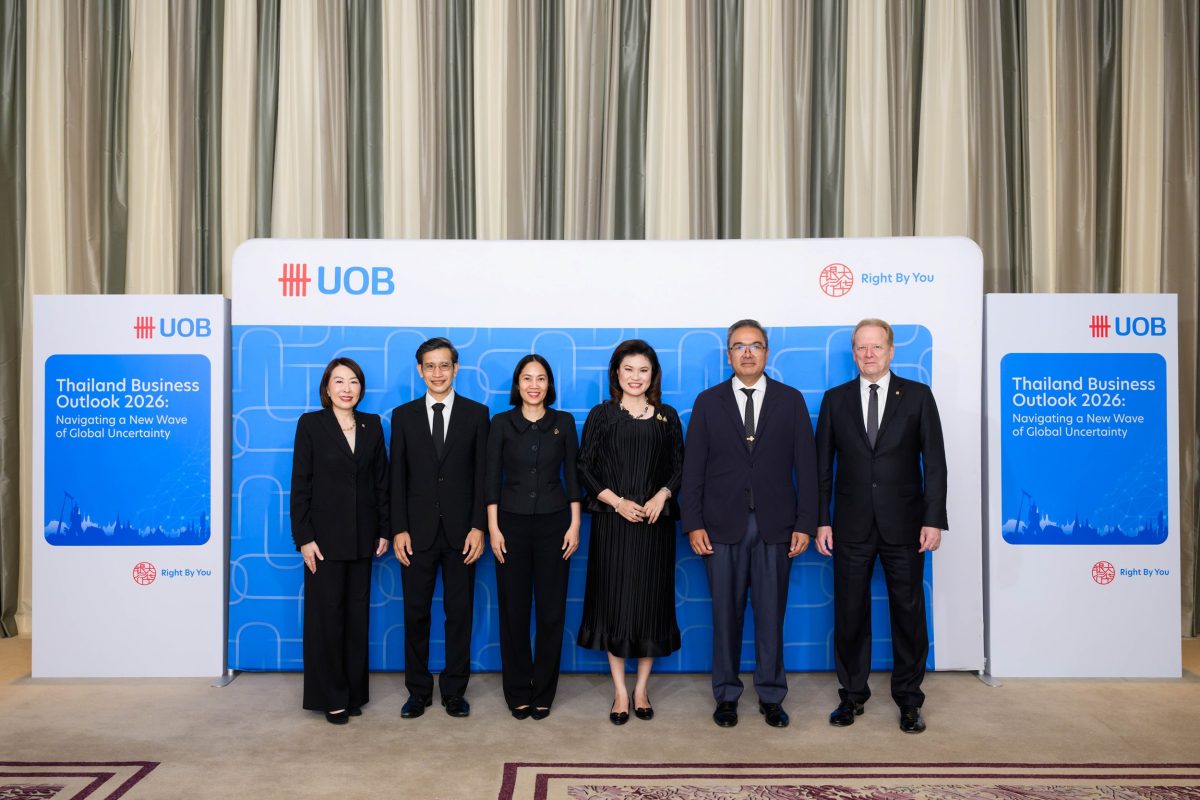
UOB Thailand and senior representatives from government agencies have identified four priorities for Thai businesses seeking to grow in a global economy increasingly shaped by geopolitical tension, changing trade policies and technological disruption.
The priorities are diversifying markets, strengthening supply chains, accelerating digital transformation and embedding sustainability into business operations. They reflect a broader shift from strategies built primarily around efficiency and low costs towards greater resilience and preparedness.
The views emerged form “Thailand Business Outlook 2026: Navigating a New Wave of Global Uncertainty”, a business forum hosted by UOB Thailand in collaboration with the Board of Investment (BOI), the Department of International Trade Promotion (DITP) and the Digital Economy Promotion Agency (depa). The event was recently held at Siam Kempinski Hotel Bangkok.
Mrs Vira-anong C. Phutrakul, Deputy CEO and Country Function Head of Wholesale Banking, UOB Thailand, said “Global uncertainty is prompting businesses to reassess how and where they grow. Thai companies still have strong potential, but the next phase will require deliberate choices: diversifying markets, strengthening supply chains, investing in AI and digital capabilities, and embedding sustainability into their operations. Together, these priorities will help businesses compete with greater confidence in a changing global economy.”
The discussion was informed by the UOB Business Outlook Study 2026, which found that more than three in five Thai businesses remained confident about their growth prospects. At the same time, companies were facing greater pressure from external factors, including geopolitical volatility and trade-policy changes affecting global supply chains.
From efficiency to resilience
in her keynote address, Dr Kirida Bhaopichitr, Vice Minister for Commerce, said business were navigating a transition in the global economic order that would influence the direction of trade, investment and supply chains over the next five to 10 years.
She said the changes went beyond short-term volatility and represented a broader restructuring of the global economy, driven by strategic competition among major powers, rising trade barriers, new economic alliances and the growing importance of energy, food and raw-material security.
Against this backdrop, businesses need to balance efficiency with greater resilience. This will require them to diversify supply-chain risks, develop a broader range of business partnerships and prepare for a less predictable operating environment.
Dr Kirida also highlighted Thailand’s opportunity to build on its strengths in food and agricultural production as global food security assumes greater importance. As trust becomes more valuable in international trade, countries and businesses seen as dependable partners will be better placed to build lasting competitive advantage.
Four priorities for competitiveness
The panel discussion, “Navigating Strategic Priorities through Uncertainty,” brought together Ms Tanita Sirisup, Deputy Secretary General of the Board of Investment (BOI); Mr Pornvit Sila-on, Deputy Director General of the Department of International Trade Promotion (DITP); and Dr Preesan Rakwatin, Acting Senior Executive Vice President from the Digital Economy Promotion Agency (depa).
The discussion identified four areas requiring particular attention from Thai businesses.
Market diversification: Changes in global trade are making dependence on a small number of markets increasingly risky. Thai businesses can create new sources of growth by exploring high-potential markets and making fuller use of Thailand’s free trade agreements.
Supply-chain resilience: Trade restrictions and geopolitical developments are affecting the availability and sourcing of raw materials and production inputs. Diversifying sources of supply, expanding supplier bases and drawing on regional networks across ASEAN can help businesses manage disruption more effectively.
Digital transformation: Digital technology and artificial intelligence can raise productivity, improve operational efficiency and reduce costs. Successful adoption will also require investment in workforce skills, access to suitable technology, cybersecurity and consistent quality standards.
Sustainability: Environmental, social and governance standards are playing a greater role in purchasing, investment and supply-chain decisions. Businesses that improve resource efficiency, reduce environmental impact and meet the expectations of international partners and investors will be better positioned for long-term growth.
The discussion pointed to a clear change in the competitive equation. Cost and efficiency remain important, but lasting growth will increasingly depend on a company’s ability to adapt, manage risk and build trusted connections across markets.