that affects not just the art of Chinese opera and faith but also communal memories.
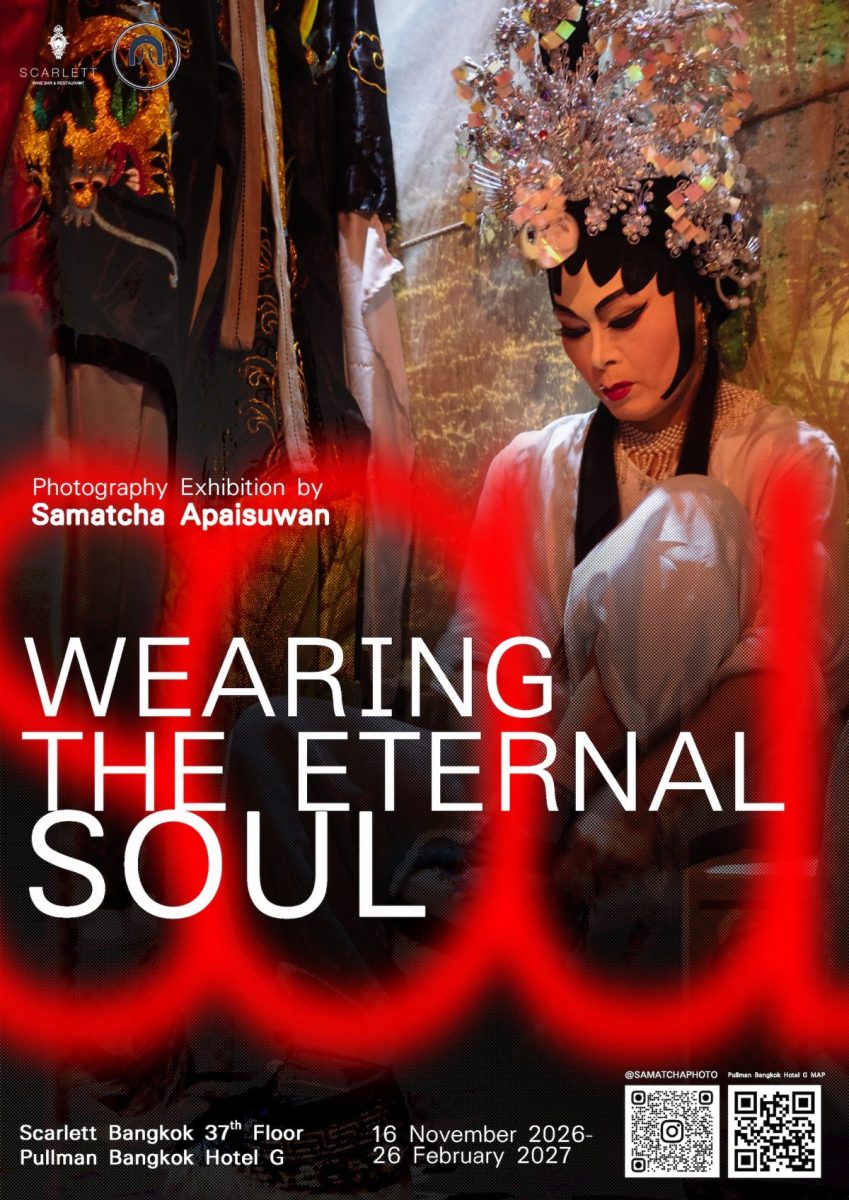
This one photographer chose to preserve moments of the historic shrine through his lens, documenting what might one day be lost forever. Wearing The Eternal Soul, the latest photography exhibition by Samatcha, indulges viewers in the stories of faith, memory, and the way of life within the Chinese community of Saphan Lueang. Having long recorded stories of people and places through an artistic lens, Samatcha has chosen to immortalize ‘Chao Mae Tuptim Shrine (Saphan Lueang)’ this time. In the exhibition, 20 curated photographs – selected from dozens captured since 2016 – vividly visualize the historic shrine that has served as the spiritual center of the Chinese community in the Banthat Thong–Samyan area.
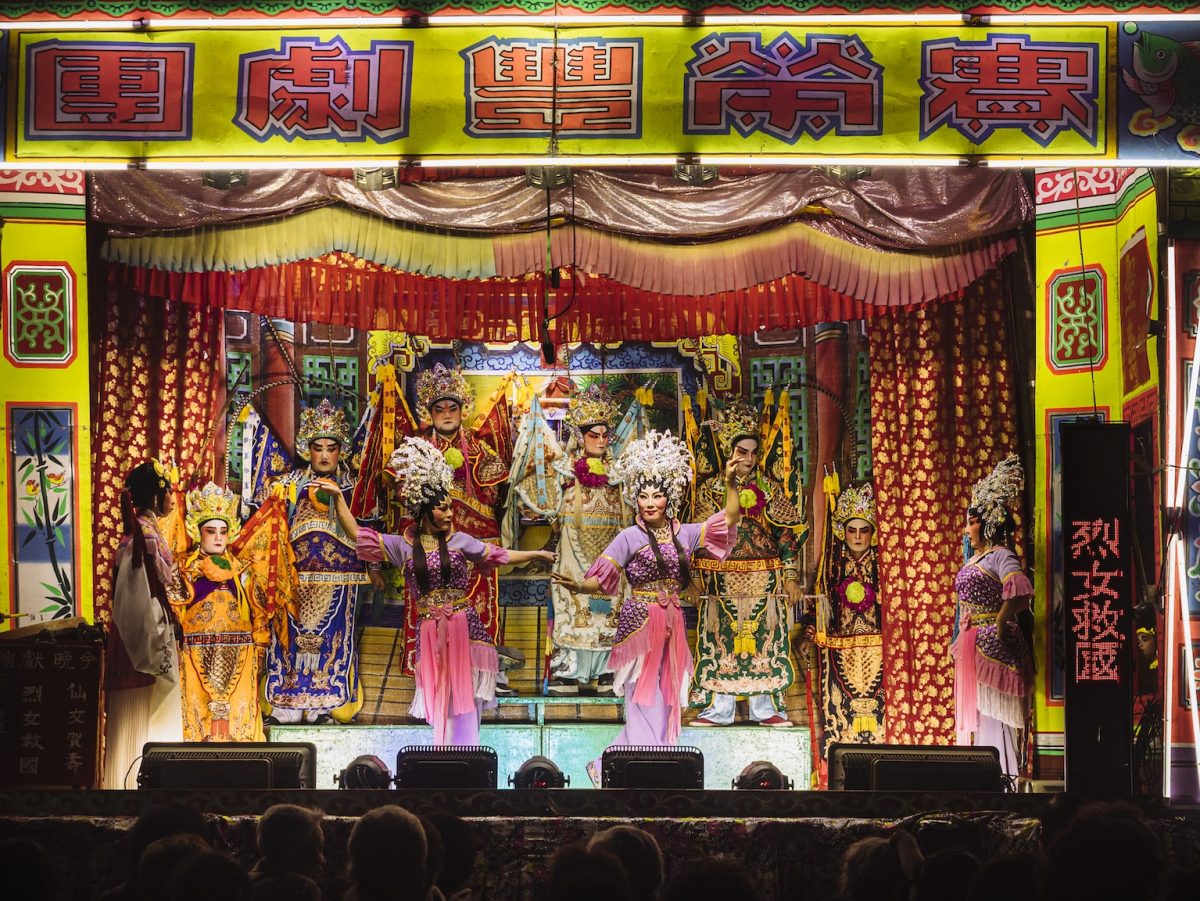
The artist began photographing the shrine in 2017 after learning that it could be cleared to make way for a modern development project. Determined to capture the imminent transformation, the artist has recorded how the shrine, which was once surrounded by homes, shops, and residents, is now hemmed in by construction barriers. Its commercial neighborhood is no longer spacious but just a narrow passageway leading to its entrance. Even the year-end ‘Sia Sing’ thanksgiving festival at the shrine, once known for having two Chinese opera troupes performing for audiences at the same time, now hosts just a single modest stage.
“Two Chinese opera troupes used to perform side by side during the ‘Sia Sing’ festival, creating a very warm and lively scene in my eyes. But these days, only a small stage is set up for Chinese opera performances. The shrine’s neighborhood has also shrunk into a small lane. Yet people’s
faith has never faded, even as the construction of high-rise buildings continues to mount pressure, leaving faith and history increasingly diminished.”
This photo collection takes viewers back to the memories of a place that was once more than a religious site, rather a center of communal bonding—particularly through Chinese opera, a vital form of entertainment at the shrine’s annual festival. Before the rise of modern entertainment, the year-end opera performances brought community members together after a year of work, offering both recreation and reunion. Local children often took part in the performances while their families watched and cheered them on, creating intergenerational bonds that endured across generations.
“I was impressed because in the past, local children would take part in the Chinese opera performances, while their families gathered in front of the stage. It was a heartwarming sight with meaning far beyond faith alone—it was a tradition handed down from generation to generation, and the very charm that endeared this community and historic shrine to me.”
For Samatcha, Chao Mae Tuptim Shrine (Saphan Lueang) carries significance not only as a place of worship but also as a living testament to the history and culture of a Chinese community that has flourished for more than 150 years. Although the present shrine building is just about 50 years old, devotion to Chao Mae Tuptim or Tianhou Shengmu can be traced to the founding of the Saphan Lueang community during the reign of King Rama V. Beyond its spiritual significance, the shrine has rich Teochew architectural and artistic value through its building structure, roof, ornamental ceramic sculptures, gilded and red-lacquered woodcarvings on the altar, dragon columns, columns inscribed with Chinese poetry, and finely carved deity sculptures by the highly skilled Chinese artisan ‘Pia Buay’. The shrine also safeguards a royal incense burner bestowed by King Rama VI as a commemorative object from the royal cremation ceremony of King Rama V in
- Bearing the royal cypher “จปร” (Chor Por Ror) alongside Chinese characters, it stands as a remarkable historical artifact linking the shrine to the broader story of Thailand’s past.
The photographs in this exhibition highlight the vibrant colors and behind-the-scenes details of Chinese opera that are rarely seen by the public, from elaborate costumes and stage settings to the everyday lives of performers and community members, to reflect the vibrancy of this traditional Chinese performing art. Wearing The Eternal Soul also offers a glimpse into shifting social contexts amid modern economic expansion and long-standing religious beliefs passed down through generations. Like a visual time capsule, this exhibition preserves the details of a community, its people, and a performing art transitioning through the eras. Today, Chao Mae Tuptim Shrine still stands, backed by the #SaveChaoMaeTuptimShrine campaign waged not only by Chulalongkorn University students and locals but also by members of the public who come together to protect this site of historical, artistic, and spiritual significance.
‘Wearing The Eternal Soul’ is much more than a photography exhibition documenting a night of Chinese opera; it also preserves the memories of a community and a faith passed down across generations. Furthermore, it invites viewers to question the meaning of urban development: when the value of a space is judged purely by economic return, where is the room left for history, tradition, and human connection? Sometimes, what breathes life into a place is not merely physical structures, but the memories and spirit collectively forged and cherished by people.
Supported by Scarlett Outsider Gallery, Pullman Bangkok Hotel G and Ba Space, ‘Wearing the Eternal Soul’ will be on view at the gallery from 16 November 2026 to 26 February 2027. Opening hours are Monday to Friday, 5pm–11.30pm, and Saturday to Sunday, 4pm–11pm. Admission is free.