
Amata Corporation PCL has unveiled a comprehensive public-private recovery package and an aggressive long-term flood defence overhaul, headlined by the bold “AMATA 800” roadmap, to support affected manufacturers and future-proof its Chonburi industrial hub.

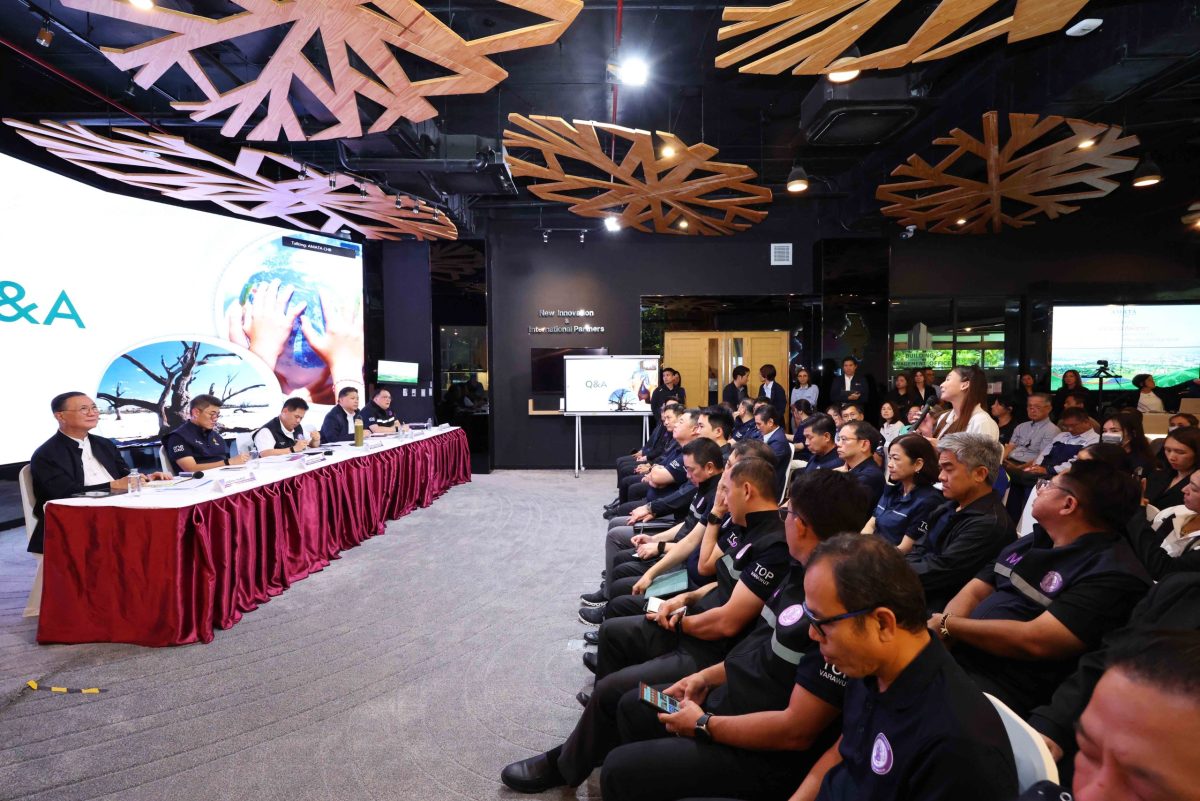
The sweeping measures follow high-level discussions held on October 8 between Amata founder and CEO Vikrom Kromadit, Minister of Industry and representatives, the Industrial Estate Authority of Thailand (IEAT) Chairman and Governor, the Chonburi Deputy Governor, and industrial estate operators.
The collaborative talks focused on accelerating business recovery, easing financial burdens, and upgrading water management infrastructure following last month’s unprecedented deluge.
To ease operational pressures and lower recovery costs for production affected tenants, Amata has announced a 50% reduction in monthly maintenance fees and a 50% reduction in monthly water charges for one year, effective from October 2026.
On the ground, round-the-clock operational teams continue to maintain maximum pumping capacity to accelerate drainage, lower canal water levels, and build reserve capacity for future rainfall.
Public health and environmental recovery efforts are running in parallel, featuring Effective Microorganism (EM) treatments for wastewater, expedited waste removal, and mobile medical units deployed in cooperation with Vibharam Amata City Hospital.
Six-Point National Recovery Proposal
To mitigate the broader economic impact and expedite industrial resurrection, Amata has formally proposed six priority measures for government collaboration:
- Joint Command Centre: Establish a dedicated joint command and coordination centre at the Amata One Stop Service Centre to monitor developments and drive response efforts.
- Waterway Improvements: Enhance public waterways and expand drainage routes by utilizing public areas to maximize discharge capacity.
- Streamlined Infrastructure Approvals: Expedite project approvals and budget allocations for water management infrastructure through public-private cooperation.
- BOI Incentives: Implement Board of Investment (BOI) incentives, including corporate income tax reductions or exemptions for three to five years, alongside import duty exemptions for replacement machinery.
- Tax Relief for Repairs: Introduce targeted tax measures to lower the costs of repairing machinery, buildings, and equipment.
- Low-Interest Liquidity: Provide low-interest loans and financial assistance proportionate to damage levels to maintain business continuity.
The “AMATA 800” Roadmap: Engineering for Climate Extremes
Following the unprecedented September 23–27 weather event, when nearly 400 millimetres of cumulative rainfall combined with runoff from local catchments caused severe water-level surges, Amata is undertaking a fundamental upgrade of its engineering standards.
The changing climate has exposed the need for greater resilience. Under the flagship “AMATA 800” roadmap, Amata will overhaul its integrated canal network, drainage systems, and water-retention areas to safely accommodate up to 800 millimetres of cumulative rainfall
To execute this vision over the coming months, Amata is engaging elite international experts and global leaders in heavy-duty flood countermeasures to study, develop, and design advanced infrastructure; consult on water-management solutions; and upgrade real-time early-warning systems ahead of the next wet season.
Amata reaffirmed its steadfast commitment to working alongside government bodies, industrial tenants, and local communities to safeguard health and safety, maintain manufacturing continuity, protect regional supply chains, and strengthen the long-term resilience of industrial estates and surrounding areas in response to increasing climate variability.
Symbol: AMATA