Differential’s three-year Stay-Switch trend shows that 2025 recorded the highest level of brand uncertainty in the study period. In 2026, intention to buy the same brand rebounded to 63.7%, while the share of owners who were unsure nearly halved. Yet almost four in ten owners still cannot say which powertrain they would choose for their next vehicle. The competitive battleground is shifting from “Which brand will I buy?” to “Which technology best fits real life?”
Differential (Thailand) Co., Ltd., a leading market research and consulting firm, has released findings from the 2026 Thailand Service Customer Experience Index (Service CXI) Study℠ and the 2026 Thailand Product Customer Experience Index (Product CXI) Study℠. Based on responses from 2,651 vehicle owners, the findings compare intentions for the next vehicle purchase across 2024-2026. They show how brand loyalty is changing as owners face a wider range of brands and powertrain choices.
From a year of uncertainty to clearer brand decisions
Across the three years, same-brand purchase intention moved from 46.1% in 2024 to 36.2% in 2025 and 63.7% in 2026. The unsure share fell from a three-year high of 60.7% in 2025 to 30.9% in 2026, below the 48.2% recorded in 2024. Owners are making clearer brand decisions, but competition has not eased: 5.4% plan to switch, close to 5.6% in 2024. Uncertainty has receded, but brands still have an opportunity to win customers.
Loyalty recovers across brand groups, but each faces a different challenge
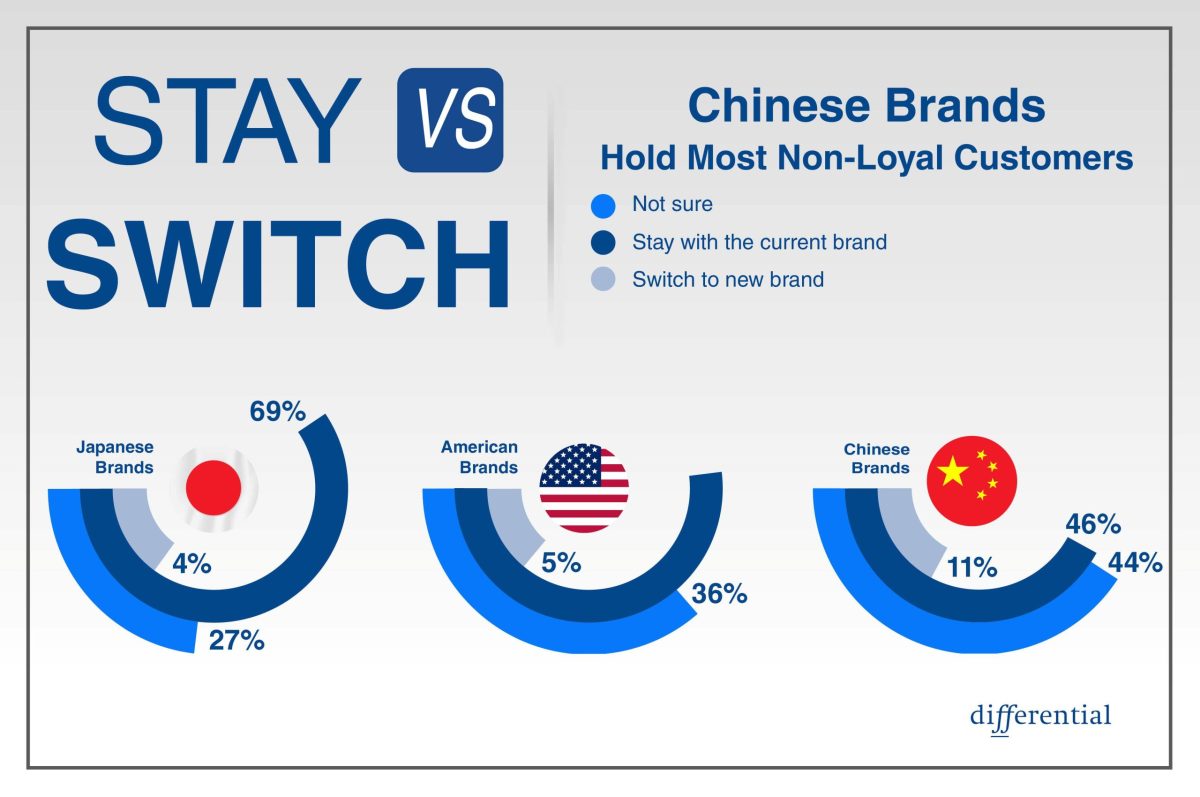
Japanese brands retain the strongest loyalty base, with 68.6% intending to buy the same brand. American brands follow at 59.8%, while Chinese brands stand at 45.7%. Although Chinese brands recovered strongly from the previous year, 43.8% of their owners remain unsure and 10.5% intend to switch, the highest share among the three brand-origin groups. Their challenge now extends beyond awareness and trial: they must turn early ownership into lasting confidence in quality, after-sales service, price stability, resale value and service-network readiness. Japanese and American brands must pair their reputational strength with innovation and choices that fit today’s lifestyles.
Brand reputation returns as the leading reason to stay
Among owners intending to buy the same brand, the leading reason is brand image and reputation at 29.8%, followed by positive previous experience at 25.4% and product satisfaction at 22.4%. Resale value rose from 1.5% to 6.4%. Loyalty therefore rests on confidence across the ownership cycle, not on the vehicle alone. Of owners who are unsure or do not plan to buy the same brand, 70.9% say their needs or preferences have changed. Lifestyle or vehicle-use changes rose from 14.1% to 20.4% as a reason to replace, while a car no longer working properly fell from 50.0% to 35.9%.
Owners are clearer about brand, but less certain about powertrain
Uncertainty about the next vehicle’s powertrain has risen steadily, from 17.2% in 2024 to 28.7% in 2025 and 39.1% in 2026. For their next vehicle, 34.0% are considering an internal combustion engine, 31.7% a hybrid or plug-in hybrid, and 13.0% a battery electric vehicle. Because respondents could select more than one powertrain, these figures represent the options under consideration, not one final choice. Among current battery electric vehicle owners, only 30.2% would consider one again, while 45.7% are unsure about their next powertrain. This challenges electric vehicle brands and gives every automaker an opportunity to explain practical fit, costs, charging, maintenance and long-term value more clearly.
Siros Satrabhaya, Managing Director of Differential Thailand, said, “The 2026 picture does not show that brand loyalty has strengthened permanently. It shows that consumers are making clearer brand decisions after 2025 recorded the highest uncertainty in the three-year period. What brands need to watch is that, as the brand question becomes easier to answer, deciding which powertrain best fits customers’ lives has become more difficult.”
“The next phase of competition goes beyond persuading customers to leave their current brand. Brands must give owners confidence that they will be supported throughout the ownership cycle and help them choose technology that fits real life. Those that explain complex choices clearly, deliver a consistent service experience and protect vehicle value will be best placed to turn today’s clearer decisions into long-term loyalty,” Satrabhaya said.